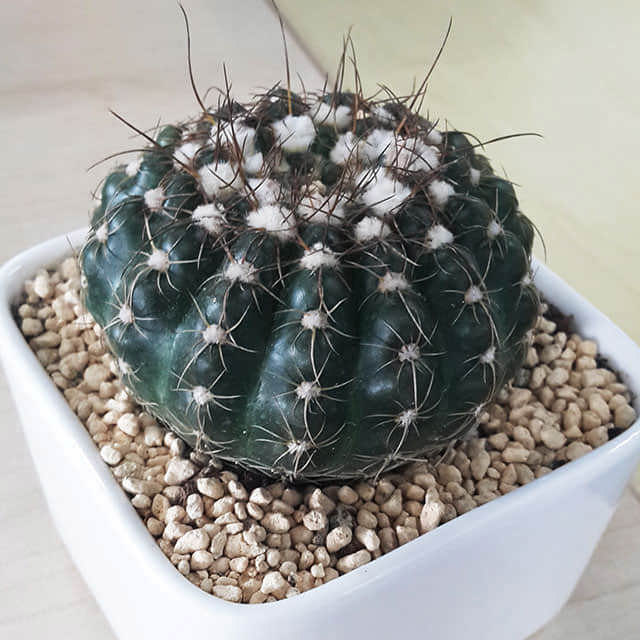
Gymnocalycium baldianum White Cottony Spots
eco White Cottony Spots

Gymnocalycium baldianum – White Cottony Spots

Why does your Gymnocalycium baldianum have white cottony spots? Diagnose the cause and fix it with our step-by-step guide.

search Possible Causes

error

Mealybugs

These small, soft-bodied insects produce a white, waxy, cotton-like secretion to protect themselves. They attach to the ribs and crevices of the Gymnocalycium body to suck sap, often leading to deflated or scarred plant tissue.

Very Common
lightbulb
How to confirm: Use a magnifying glass to check for tiny moving insects hidden deep within the plant's ribs or near the base.
build How to fix it
shopping_cart Recommended Products
1 Isolate the plant immediately from other greenery to prevent the spread of mealybugs and use a cotton swab dipped in isopropyl alcohol to manually remove the white cottony masses from the plant's ribs.
2 Apply an organic insecticide spray to the entire plant, ensuring you reach into the crevices and ribs where pests hide, to eliminate any remaining insects and larvae.
3 Monitor the soil moisture levels closely, as mealybugs thrive on stressed plants; use a moisture meter to ensure the substrate remains appropriately dry for this cactus species.
warning

Cottony Blight (Fungal/Oomycete)

Certain fungal pathogens can manifest as white, fuzzy mycelium on the surface of the cactus skin, especially in high-humidity environments. This often occurs if the Gymnocalycium has been subjected to frequent overhead watering.

Common
lightbulb
How to confirm: Observe if the white spots are accompanied by soft, rotting flesh or a distinct unpleasant odor.
build How to fix it
shopping_cart Recommended Products
1 Apply an organic fungicide to the affected areas to eliminate the fungal mycelium and prevent the spread of the blight.
2 Improve air circulation around the cactus and avoid overhead watering to reduce the high humidity that promotes fungal growth.
3 Monitor the soil moisture levels closely to ensure the cactus is not sitting in overly damp substrate.
warning

Scale Insects (Cottony Scale)

Some species of scale insects produce a fluffy white appearance that can be mistaken for cotton. They remain relatively stationary and can cause the Gymnocalycium to exhibit stunted growth or yellowing patches.

Common
lightbulb
How to confirm: Try to gently scrape a spot with a fingernail; if it is a hard, shell-like structure underneath the fuzz, it is likely scale.
build How to fix it
shopping_cart Recommended Products
1 Manually remove visible white cottony clusters using a cotton swab dipped in isopropyl alcohol to kill the insects on contact.
2 Apply an organic insecticide spray to the entire plant to eliminate remaining scale insects and prevent further infestation.
3 Monitor the soil moisture levels closely, as overwatering can create the humid conditions that scale insects thrive in.
local_hospital All symptoms eco All plants with white cottony spots
favorite

