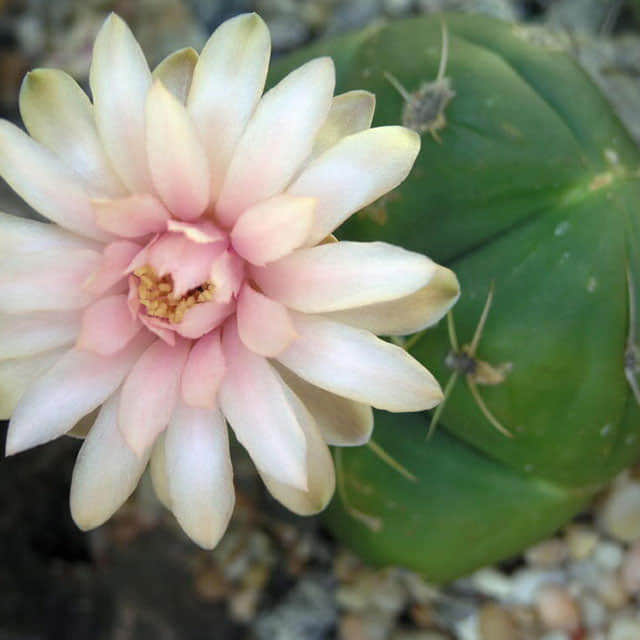
Gymnocalycium horstii White Cottony Spots
eco White Cottony Spots

Gymnocalycium horstii – White Cottony Spots

Why does your Gymnocalycium horstii have white cottony spots? Diagnose the cause and fix it with our step-by-step guide.

search Possible Causes

error

Mealybugs

These small, white, sap-sucking insects produce a waxy, cottony secretion to protect themselves. In Gymnocalycium species, they often cluster around the base of the plant or within the areoles, causing localized swelling and potential rot.

Very Common
lightbulb
How to confirm: Use a toothpick to gently dislodge a spot; if it reveals small, moving insects underneath, it is mealybugs.
build How to fix it
shopping_cart Recommended Products
1 Isolate the plant immediately to prevent the mealybugs from spreading to your other houseplants.
2 Treat the infestation by spraying the plant with an organic insecticide/miticide to kill the insects and their waxy coatings.
3 Use a cotton swab dipped in isopropyl alcohol to manually remove any visible white cottony clusters from the base and areoles of the cactus.
warning

Cottony Scale

Similar to mealybugs, these pests produce white filaments that look like fluff. They attach firmly to the epidermis of the cactus, draining nutrients and leading to stunted growth or skin discoloration.

Common
lightbulb
How to confirm: Check if the white spots are firmly attached to the plant body rather than just resting on the surface.
build How to fix it
shopping_cart Recommended Products
1 Treat the cactus with an organic insecticide spray to eliminate the cottony scale insects and their eggs.
2 Manually remove visible white clusters using a cotton swab dipped in isopropyl alcohol to prevent further nutrient drainage.
3 Isolate the plant from other succulents to prevent the spread of pests throughout your collection.
warning

Sap/Exudate Oxidation

If the cactus has suffered physical damage or a minor puncture, the internal fluids can seep out and dry into white, crusty, or cotton-like patches. This is a common response in Gymnocalycium when the epidermis is breached.

Common
lightbulb
How to confirm: Examine the area for any signs of scarring, cracks, or recent mechanical injury to the cactus skin.
build How to fix it
shopping_cart Recommended Products
1 Inspect the area for any physical punctures or cracks in the cactus skin.
2 Clean the affected area gently with a soft, dry cloth or a cotton swab to remove the dried residue and prevent further buildup.
3 Ensure the plant is in a well-draining environment and avoid touching the wound to allow the epidermis to callous over naturally.
warning

Fungal Mycelium (Mold)

High humidity and poor airflow around the base of the Gymnocalycium can allow saprophytic fungi to grow. This appears as a thin, white, web-like structure on the surface of the plant or the top layer of soil.

Common
lightbulb
How to confirm: Check if the white growth is accompanied by soft, mushy tissue or a foul smell indicating decay.
build How to fix it
shopping_cart Recommended Products
1 Gently remove the white fungal growth from the plant surface and topsoil using a soft brush or damp cloth to prevent further spread.
2 Improve airflow around the base of the cactus and reduce humidity by ensuring the plant is in a well-ventilated area.
3 Repot the plant in a well-draining cactus mix amended with perlite to prevent moisture retention at the base.
local_hospital All symptoms eco All plants with white cottony spots
favorite