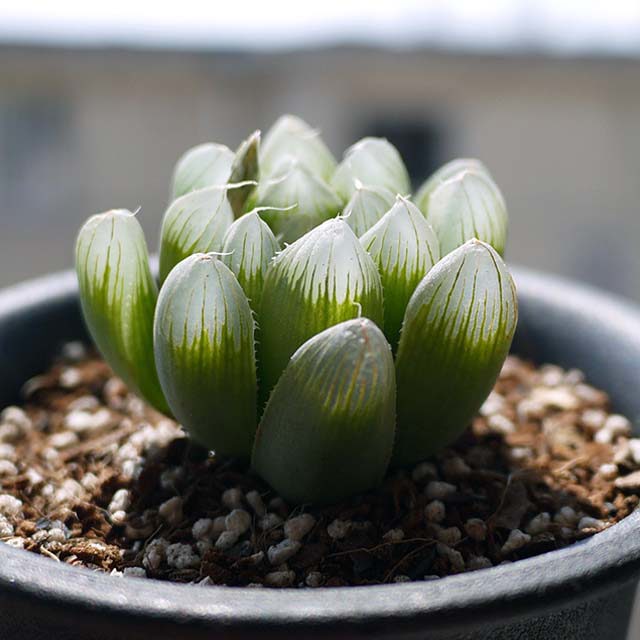
Haworthia cymbiformis transiens White Cottony Spots
eco White Cottony Spots

Haworthia cymbiformis transiens – White Cottony Spots

Why does your Haworthia cymbiformis transiens have white cottony spots? Diagnose the cause and fix it with our step-by-step guide.

search Possible Causes

error

Mealybugs

These small, soft-bodied insects secrete a white, waxy, cotton-like substance to protect themselves while feeding on the sap of the Haworthia leaves. They often congregate in the crevices between the leaf bases where moisture accumulates.

Very Common
lightbulb
How to confirm: Use a cotton swab dipped in isopropyl alcohol to dab the white spots; if they dissolve and turn brown, it is likely mealybugs.
build How to fix it
shopping_cart Recommended Products
1 Isolate the plant immediately to prevent the mealybugs from spreading to your other houseplants.
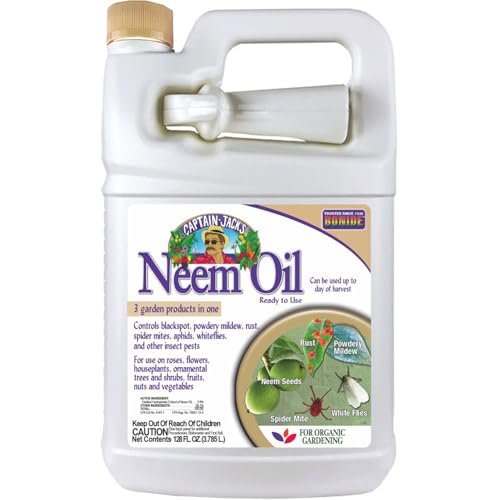
2 Treat the infestation by spraying the plant with an organic insecticide/miticide to kill the insects and their protective waxy coating.
3 Use a cotton swab dipped in isopropyl alcohol to manually remove visible white cottony clusters from the crevices of the leaf bases.
warning

Cottony Scale

Similar to mealybugs, these pests produce a fluffy white coating. They attach themselves to the translucent 'windows' of the Haworthia, which can eventually lead to scarring or loss of light transmission.

Common
lightbulb
How to confirm: Gently scrape the white mass with a fingernail to see if a distinct, hard-bodied insect is underneath.
build How to fix it
shopping_cart Recommended Products
1 Isolate the plant immediately to prevent the spread of scale to other houseplants and use a cotton swab dipped in isopropyl alcohol to manually remove the white cottony spots.
2 Apply an organic insecticide spray to the plant to target any remaining pests and prevent new infestations.
3 Monitor the soil moisture levels to ensure the plant is not being overwatered, as excess moisture can create a humid environment conducive to pest growth.
warning

Sclerotinia (White Mold)

While less common in succulents, high humidity can trigger fungal pathogens that manifest as white, fuzzy mycelium on the plant tissue. This usually occurs if the Haworthia's crown stays damp for extended periods.

Common
lightbulb
How to confirm: Check if the base of the leaves is turning soft or mushy in addition to the white fuzz.
build How to fix it
shopping_cart Recommended Products
1 Remove all visible white fuzzy growth using a sterile tool and apply a fungicide to prevent the spread of the mold.
2 Improve air circulation around the plant and ensure the crown of the Haworthia remains dry by adjusting your watering schedule.
3 Repot the plant in a well-draining substrate containing perlite to prevent moisture retention around the base.
local_hospital All symptoms eco All plants with white cottony spots
favorite