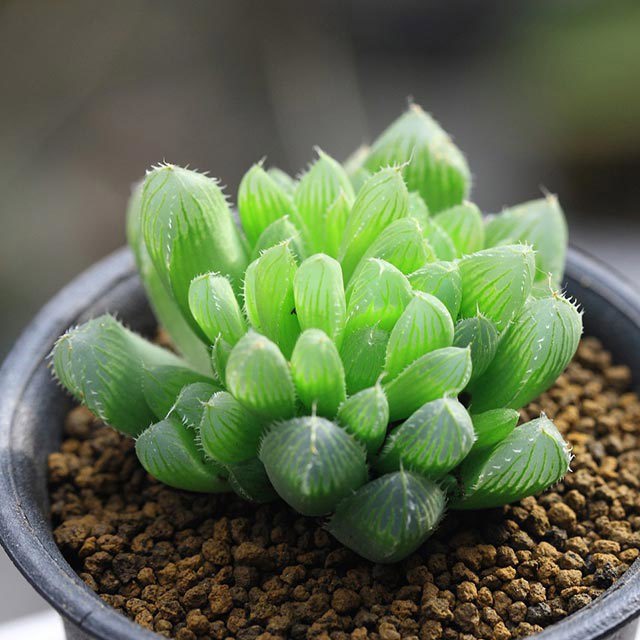
Why does your Haworthia cymbiformis triebnet poelln have white cottony spots? Diagnose the cause and fix it with our step-by-step guide.
These small, sap-sucking insects produce a white, waxy, cottony secretion to protect themselves while feeding on the succulent's tissues. They often congregate in the crevices between the leaves and near the base of the Haworthia.
While less common in succulents than in leafy plants, high humidity and poor airflow can cause fungal spores to appear as a white dusty coating on the windowed leaves. This can interfere with the plant's ability to photosynthesize through its translucent windows.
In conditions of excessive substrate moisture, certain fungi can produce white mycelium that looks like cottony fuzz on the surface of the plant or soil. This often precedes tissue rot in Haworthia species.

 English
 Italiano


