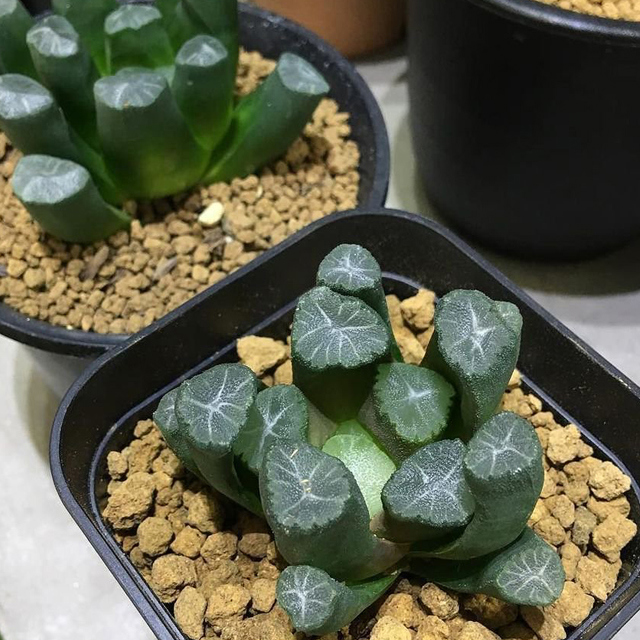
Haworthia maughanii Yellow Leaves
eco Yellow Leaves

Haworthia maughanii – Yellow Leaves

Why does your Haworthia maughanii have yellow leaves? Diagnose the cause and fix it with our step-by-step guide.

search Possible Causes

error

Overwatering and Root Rot

Haworthia maughanii are succulents that require a drying period between waterings. Excessive moisture causes the roots to suffocate, leading to chlorosis (yellowing) as the plant's vascular system fails.

Very Common
lightbulb
How to confirm: Gently tug on the base of the leaves; if they feel loose or the stem is mushy, it is likely root rot.
build How to fix it
shopping_cart Recommended Products
1 Immediately remove the plant from its current pot and inspect the roots for any mushy, black, or foul-smelling decay.
2 Prune away all dead or rotting roots using sterilized tools and repot the Haworthia in a well-draining, gritty substrate like a mix of perlite and pumice to prevent future suffocation.
3 Transition to a more breathable container and use a moisture meter to ensure the soil is completely dry before the next watering session.
error

Excessive Light Exposure (Sunscald)

While these plants enjoy bright light, direct midday sun can bleach the chlorophyll in the fleshy leaves. This physiological stress manifests as yellow or white patches on the leaf surface.

Very Common
lightbulb
How to confirm: Check if the yellowing is localized to areas directly exposed to a window or intense light source.
build How to fix it
shopping_cart Recommended Products
1 Immediately move the Haworthia to a location with bright, indirect light to prevent further chlorophyll bleaching and sunscald.
2 Monitor the soil moisture levels closely, as sun-stressed plants can dehydrate rapidly; use a moisture meter to ensure the substrate remains slightly damp but not waterlogged.
3 If the plant shows signs of recovery, you can provide supplemental light using a full-spectrum LED to maintain health without the heat of direct sun.
warning

Nutrient Deficiency (Nitrogen)

A lack of available nitrogen in the growing medium prevents the synthesis of chlorophyll. In Haworthia, this typically results in an overall pale or yellowish tint to the older leaves.

Common
lightbulb
How to confirm: Observe if the yellowing is progressing from the oldest, bottom leaves toward the new growth.
build How to fix it
shopping_cart Recommended Products
1 Apply a nitrogen-rich liquid fertilizer to the soil to restore chlorophyll production and green up the leaves.
2 Check the soil moisture levels with a meter to ensure the nitrogen is being effectively absorbed and not being washed away by overwatering.
3 Refresh the growing medium with a new organic potting mix to replenish depleted nutrients.
warning

Temperature Stress

Sudden drops in temperature or exposure to drafts can cause metabolic disruption. For this species, temperatures below 50°F (10°C) can trigger a yellowing response as the plant enters a stressed state.

Common
lightbulb
How to confirm: Verify if the plant is located near an air conditioning vent or a drafty window during colder months.
build How to fix it
shopping_cart Recommended Products
1 Relocate the plant to a stable, draft-free environment and ensure temperatures remain consistently above 50°F (10°C).
2 Monitor the soil moisture levels closely, as temperature fluctuations can alter evaporation rates and lead to secondary issues like root rot.
3 Apply a microbial-based liquid fertilizer to help the plant recover from environmental stress and support root zone strength.

Other Haworthia maughanii problems

Your plant might also be experiencing one of these issues:

local_hospital All symptoms eco All plants with yellow leaves
favorite