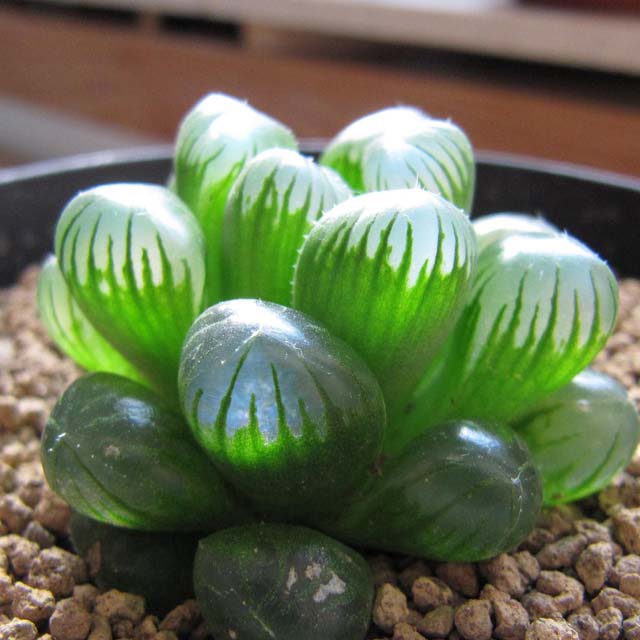
Haworthia obtusa f. truncata White Cottony Spots
eco White Cottony Spots

Haworthia obtusa f. truncata – White Cottony Spots

Why does your Haworthia obtusa f. truncata have white cottony spots? Diagnose the cause and fix it with our step-by-step guide.

search Possible Causes

error

Mealybugs

These small, soft-bodied insects produce a white, waxy, cottony secretion to protect themselves while feeding on the sap of the Haworthia. They often cluster in the crevices between leaves or near the base of the plant.

Very Common
lightbulb
How to confirm: Use a wooden toothpick to gently probe the white spots; if they move or reveal tiny insects underneath, it is mealybugs.
build How to fix it
shopping_cart Recommended Products
1 Isolate the plant immediately to prevent the mealybugs from spreading to your other houseplants.
2 Carefully remove visible mealybugs using a cotton swab dipped in isopropyl alcohol, making sure to clean the crevices between the leaves.
3 Apply an organic insecticide spray to the entire plant to eliminate any remaining insects and larvae.
warning

Pseudococcidae (Scale Insects)

Certain types of scale can appear as fuzzy or cottony masses, particularly when they are in their mobile crawler stage. They penetrate the succulent tissue of the Haworthia to suck nutrients.

Common
lightbulb
How to confirm: Check for a sticky residue known as honeydew on the leaves near the white spots.
build How to fix it
shopping_cart Recommended Products
1 Treat the plant with an organic insecticide spray to eliminate the mobile crawler stage and adult insects.
2 Manually remove visible cottony masses using a cotton swab dipped in isopropyl alcohol to prevent further tissue damage.
3 Isolate the Haworthia from other houseplants to prevent the scale insects from spreading to healthy plants.
warning

Sap exudation due to mechanical damage

If the translucent 'windows' of the Haworthia are punctured or bruised, the plant may exude sap that dries into a white, crusty, or fuzzy-looking residue.

Common
lightbulb
How to confirm: Inspect the area for any physical cracks, scars, or recent contact with sharp objects/tools.
build How to fix it
shopping_cart Recommended Products
1 Gently clean the white residue from the plant windows using a soft, damp cotton swab to prevent secondary fungal growth.
2 Ensure the plant is placed in a stable environment to prevent further physical contact or bruising of the succulent leaves.
3 Monitor the area for any signs of pests like mealybugs, which can mimic white cottony spots, using a targeted organic spray if needed.
local_hospital All symptoms eco All plants with white cottony spots
favorite
