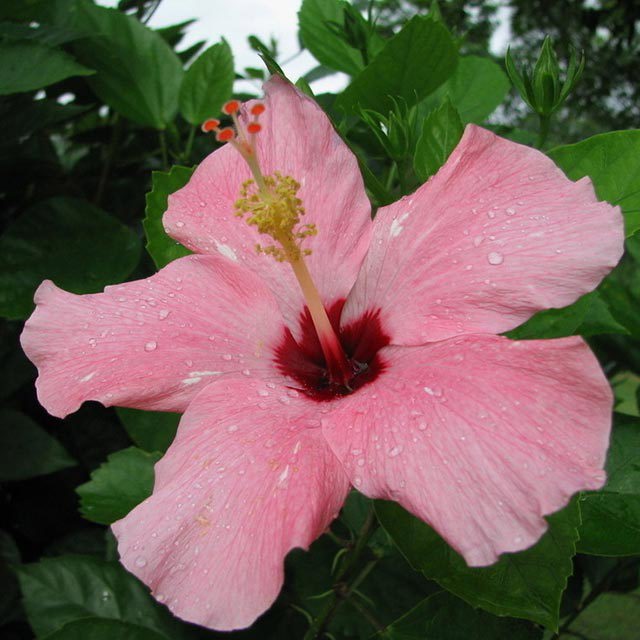
Hibiscus rosa-sinensis Cheerleader Cerise Dark Eye Sudden Leaf Drop
eco Sudden Leaf Drop

Hibiscus rosa-sinensis Cheerleader Cerise Dark Eye – Sudden Leaf Drop

Why does your Hibiscus rosa-sinensis Cheerleader Cerise Dark Eye have sudden leaf drop? Diagnose the cause and fix it with our step-by-step guide.

search Possible Causes

error

Environmental Shock (Temperature or Light Fluctuations)

Tropical Hibiscus are highly sensitive to sudden changes in environment. A rapid drop in temperature or a sudden increase in intense direct sunlight can trigger a stress response resulting in immediate leaf abscission.

Very Common
lightbulb
How to confirm: Check if there has been a recent change in location, a cold draft, or a sudden heatwave in your area.
build How to fix it
shopping_cart Recommended Products
1 Stabilize the environment by moving the plant to a location with consistent temperatures and filtered, bright light to prevent further stress.
2 Monitor soil moisture levels closely during this recovery period to ensure the plant is neither bone-dry nor waterlogged, using a moisture meter for precision.
3 Apply a diluted liquid seaweed fertilizer to help the plant recover from the physiological stress and promote new root and leaf development.
error

Watering Stress (Overwatering or Underwatering)

Hibiscus require consistent moisture but cannot tolerate 'wet feet.' Overwatering leads to root hypoxia and rot, while extreme drought causes the plant to shed leaves to conserve water.

Very Common
lightbulb
How to confirm: Stick your finger two inches into the soil to check if it is bone dry or saturated and muddy.
build How to fix it
shopping_cart Recommended Products
1 Check the soil moisture level at the root zone using a moisture meter to determine if the plant is currently drowning or parched.
2 If the soil is waterlogged, repot the hibiscus in a well-draining medium by mixing in horticultural perlite to improve aeration and prevent root rot.
3 Ensure the plant is in a pot with adequate drainage and avoid letting it sit in standing water in the saucer.
warning

Root Rot (Phytophthora or Pythium)

Persistent moisture in heavy soil leads to fungal pathogens attacking the root system. Once roots decay, the plant can no longer support its foliage, leading to rapid leaf drop.

Common
lightbulb
How to confirm: Gently lift the plant from its pot to see if the roots are dark, slimy, or emitting an unpleasant odor.
build How to fix it
shopping_cart Recommended Products
1 Immediately inspect the roots for mushy, dark, or foul-smelling decay and trim away any dead sections using sterilized tools.
2 Repot the hibiscus in a well-draining, airy medium by mixing existing soil with perlite or horticultural grit to improve aeration and prevent future waterlogging.
3 Transition to a more breathable container with excellent drainage and use a moisture meter to ensure the soil is allowed to dry out between waterings.
warning

Pest Infestation (Spider Mites or Aphids)

Small sucking insects like spider mites drain the sap from the leaves. Severe infestations weaken the plant's vascular system, causing the foliage to wilt and drop.

Common
lightbulb
How to confirm: Inspect the undersides of the remaining leaves for tiny webbing or small moving specks.
build How to fix it
shopping_cart Recommended Products
1 Apply an organic insecticide or miticide to eliminate the spider mites or aphids and prevent further sap loss.
2 Inspect the undersides of leaves for webbing or small insects and wipe them down with a damp cloth to physically remove pests.
3 Monitor soil moisture levels to ensure the plant is not also experiencing water stress, which can exacerbate leaf drop.

Other Hibiscus rosa-sinensis Cheerleader Cerise Dark Eye problems

Your plant might also be experiencing one of these issues:

local_hospital All symptoms eco All plants with sudden leaf drop
favorite