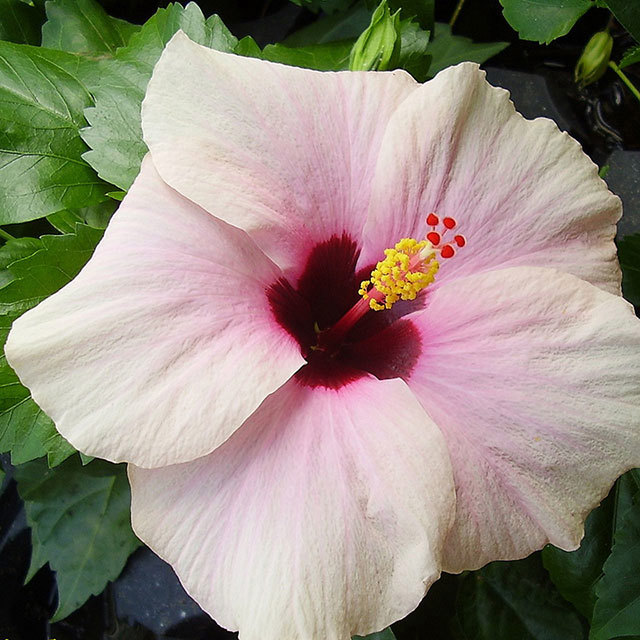
Hibiscus rosa sinensis Cheerleader Light Pink Fine Webbing
eco Fine Webbing

Hibiscus rosa sinensis Cheerleader Light Pink – Fine Webbing

Why does your Hibiscus rosa sinensis Cheerleader Light Pink have fine webbing? Diagnose the cause and fix it with our step-by-step guide.

pets Pet Friendly

search Possible Causes

error

Two-Spotted Spider Mites (Tetranychus urticae)

The presence of fine webbing is a hallmark sign of a spider mite infestation, which thrives in the warm, dry conditions common to Hibiscus. These arachnids pierce plant cells to feed on sap, causing stippling and eventually leading to leaf drop.

Very Common
lightbulb
How to confirm: Hold a white piece of paper under a leaf and tap the leaf sharply to see if tiny crawling dots fall onto the paper.
build How to fix it
shopping_cart Recommended Products
1 Apply an organic insecticide/miticide spray to the plant to eliminate the spider mite population and destroy eggs.
2 Increase humidity around the plant and ensure the soil remains consistently moist, as spider mites thrive in dry environments.
3 Gently wipe the leaves with a damp cloth to physically remove webbing and any remaining mites from the undersides of the foliage.
warning

Cheesemite or other Mite species

While less common than Two-Spotted mites, other micro-mites can create silk structures on the underside of Hibiscus foliage when humidity levels drop significantly. This webbing serves as a protective micro-environment for their eggs and nymphs.

Common
lightbulb
How to confirm: Inspect the leaf undersides closely with a magnifying glass to look for tiny silken cocoons or moving larvae.
build How to fix it
shopping_cart Recommended Products
1 Apply an organic miticide/insecticide spray to the plant, ensuring you thoroughly coat the undersides of all leaves to eliminate mites and their eggs.
2 Increase local humidity around the Hibiscus to disrupt the mite's micro-environment and prevent further webbing formation.
3 Monitor soil moisture levels to ensure the plant is not under drought stress, which can exacerbate mite infestations.
info

Extreme Environmental Desiccation

In cases of extreme heat and lack of humidity, certain fungal hyphae or even structural breakdown of leaf surface fibers can mimic fine webbing. However, this is usually accompanied by significant wilting and crispy leaf edges.

Rare
lightbulb
How to confirm: Check if the soil moisture levels have been consistently low and if the plant shows signs of overall dehydration.
build How to fix it
shopping_cart Recommended Products
1 Increase ambient humidity around the plant to prevent further structural breakdown of leaf fibers and desiccation.
2 Monitor soil moisture levels closely to ensure the plant does not reach a state of extreme dehydration.
3 Inspect the undersides of leaves for actual spider mites, as they are the most common cause of true fine webbing.

Other Hibiscus rosa sinensis Cheerleader Light Pink problems

Your plant might also be experiencing one of these issues:

local_hospital All symptoms eco All plants with fine webbing
favorite


