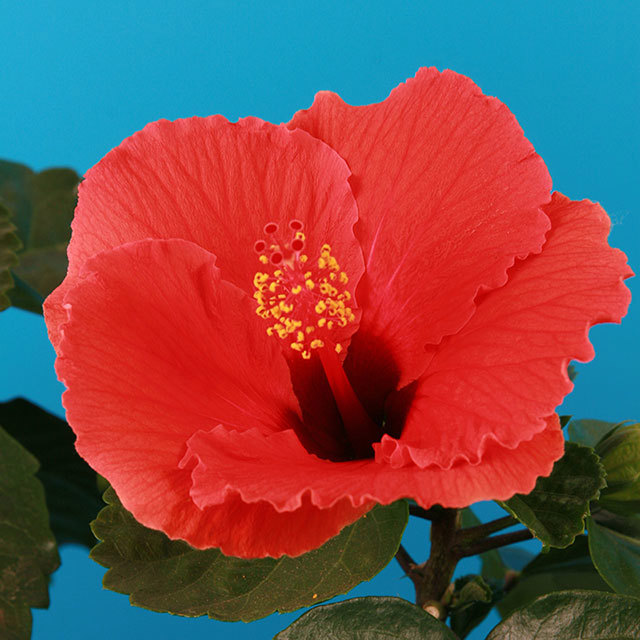
Hibiscus rosa-sinensis Cheerleader Simply Red Sudden Leaf Drop
eco Sudden Leaf Drop

Hibiscus rosa-sinensis Cheerleader Simply Red – Sudden Leaf Drop

Why does your Hibiscus rosa-sinensis Cheerleader Simply Red have sudden leaf drop? Diagnose the cause and fix it with our step-by-step guide.

search Possible Causes

error

Temperature Shock or Drafts

Hibiscus rosa-sinensis is highly sensitive to sudden temperature fluctuations. Exposure to cold drafts from air conditioning or a drop in nighttime temperatures can trigger an immediate stress response, causing the plant to shed leaves to conserve energy.

Very Common
lightbulb
How to confirm: Check if the plant has recently been moved near a window, vent, or door that experiences temperature changes.
build How to fix it
shopping_cart Recommended Products
1 Move the plant to a stable, draft-free location away from air conditioning vents, heaters, or cold windows to prevent further temperature fluctuations.
2 Maintain a consistent temperature between 60°F and 90°F and avoid placing the plant in the path of direct wind or cooling drafts.
3 Monitor soil moisture closely during this recovery period using a moisture meter to ensure the plant is not overwatered while in a stressed state.
error

Watering Irregularity (Drought/Overwatering Stress)

Rapidly cycling between bone-dry soil and waterlogged conditions causes physiological stress in tropical hibiscus. Inconsistent moisture levels disrupt the root's ability to transport nutrients, leading to sudden leaf abscission.

Very Common
lightbulb
How to confirm: Insert your finger 2 inches into the soil; if it is extremely dry or muddy, your watering schedule is likely inconsistent.
build How to fix it
shopping_cart Recommended Products
1 Check the current soil moisture level by inserting a probe to determine if the plant is currently experiencing drought or waterlogging.
2 Establish a consistent watering schedule, ensuring the soil is kept evenly moist but never waterlogged, and use a saucer to catch excess water.
3 If the soil is compacted or waterlogged, repot the hibiscus in a well-draining medium like Espoma Organic Potting Soil Mix to improve aeration.
warning

Spider Mite Infestation

Two-spotted spider mites thrive in warm, dry conditions and feed on the undersides of hibiscus leaves. Their feeding punctures the leaf cells, which can lead to rapid yellowing and sudden dropping of foliage.

Common
lightbulb
How to confirm: Inspect the undersides of the remaining leaves for tiny white webs or moving speckles.
build How to fix it
shopping_cart Recommended Products
1 Apply an organic miticide or insecticide to the plant, ensuring you thoroughly spray the undersides of all leaves to eliminate mites and their eggs.
2 Increase local humidity and avoid dry, warm air pockets by misting the foliage regularly or using a pebble tray.
3 Monitor soil moisture levels to ensure the plant is not experiencing drought stress, which can exacerbate mite damage.
warning

Nutrient Deficiency (Nitrogen)

A lack of available nitrogen prevents the plant from maintaining chlorophyll levels in older leaves. While usually a slower process, severe depletion can cause sudden leaf drop as the plant scavenges nutrients for new growth.

Common
lightbulb
How to confirm: Look for uniform yellowing of older leaves before they fall off.
build How to fix it
shopping_cart Recommended Products
1 Apply a nitrogen-rich liquid fertilizer to boost chlorophyll production and provide immediate nutrient availability.
2 Check the soil moisture levels using a moisture meter to ensure the plant is not also experiencing water stress, which can exacerbate leaf drop.
3 Inspect the leaves for any signs of pests like aphids or mites that might be causing secondary stress to the plant.

Other Hibiscus rosa-sinensis Cheerleader Simply Red problems

Your plant might also be experiencing one of these issues:

local_hospital All symptoms eco All plants with sudden leaf drop
favorite