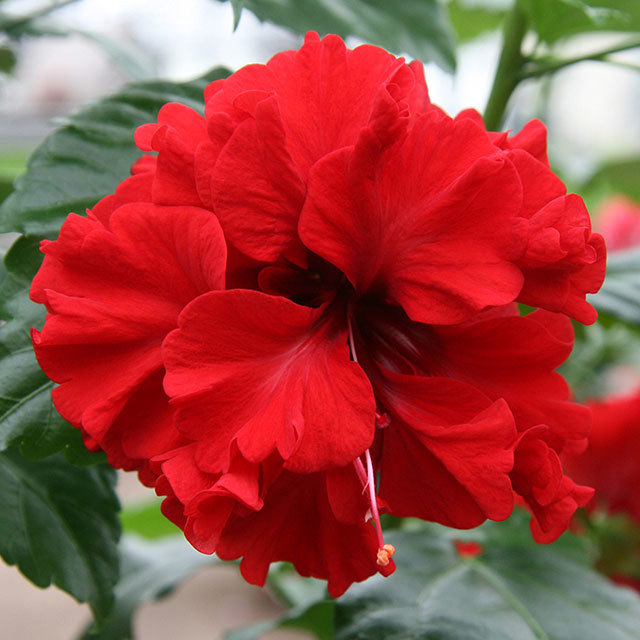
Why does your Hibiscus rosa-sinensis Firefall Double Red have sticky leaves? Diagnose the cause and fix it with our step-by-step guide.
Aphids are small, soft-bodied insects that congregate on the tender new growth and flower buds of Hibiscus, injecting piercing-sucking mouthparts into the plant to feed on sap. As they feed, they excrete a sugary substance called honeydew, which creates the characteristic sticky coating on leaves.
Scale insects attach themselves to the stems and leaf petioles of your Hibiscus, sucking nutrients from the phloem. Like aphids, they produce honeydew as a byproduct of digestion, which can coat the surrounding foliage in a sticky film.
Whiteflies inhabit the undersides of Hibiscus leaves and feed on the plant's sap. Their excretion of honeydew results in sticky leaves, often accompanied by a fine white powder or tiny flying insects that emerge when the plant is disturbed.
Mealybugs are soft-bodied insects that appear as small, white, cottony masses in the crevices of Hibiscus nodes and leaf junctions. Their feeding process results in honeydew production, making the nearby foliage feel tacky.
Your plant might also be experiencing one of these issues:

 English
 Italiano
