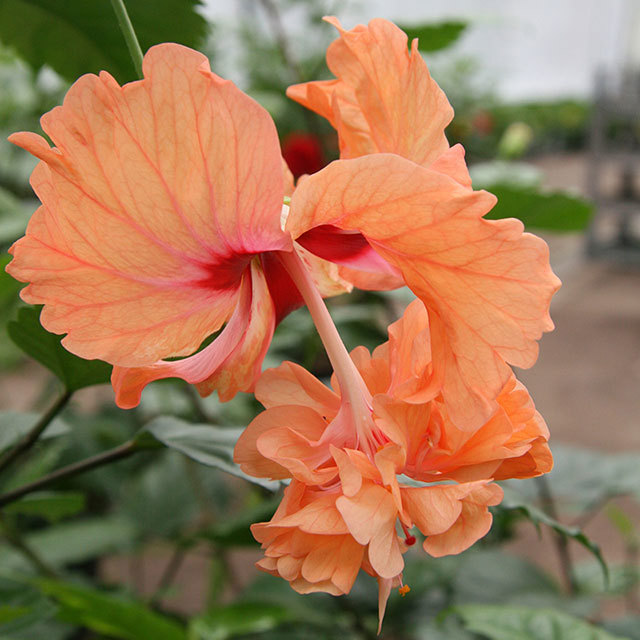
Hibiscus rosa sinensis Firefall Orange Sudden Leaf Drop
eco Sudden Leaf Drop

Hibiscus rosa sinensis Firefall Orange – Sudden Leaf Drop

Why does your Hibiscus rosa sinensis Firefall Orange have sudden leaf drop? Diagnose the cause and fix it with our step-by-step guide.

search Possible Causes

error

Environmental Shock (Temperature or Light Fluctuations)

Hibiscus rosa-sinensis is highly sensitive to sudden changes in environment. A sharp drop in nighttime temperatures or moving the plant from shade to intense direct sunlight can trigger a stress response resulting in rapid abscission.

Very Common
lightbulb
How to confirm: Check if there have been recent temperature drops below 60°F (15°C) or recent movement of the pot to a new location.
build How to fix it
shopping_cart Recommended Products
1 Stabilize the plant's environment by placing it in a consistent location away from cold drafts or sudden direct sunlight exposure.
2 Monitor soil moisture levels closely during this recovery period to ensure the plant is not overwatered while it is in a stressed state.
3 Apply a diluted dose of liquid seaweed fertilizer to help the plant recover from environmental stress and boost nutrient uptake.
error

Water Stress (Inconsistent Watering)

Both underwatering and overwatering cause leaf drop in Firefall Orange. Dry soil causes leaves to wilt and drop, while waterlogged soil leads to root hypoxia and subsequent leaf shedding.

Very Common
lightbulb
How to confirm: Insert your finger two inches into the soil to check if it is bone dry or saturated/muddy.
build How to fix it
shopping_cart Recommended Products
1 Check the current soil moisture level by inserting a probe into the root zone to determine if the plant is suffering from drought or waterlogging.
2 If the soil is bone dry, water thoroughly until it drains from the bottom; if the soil is saturated, allow it to dry out completely before the next watering.
3 Ensure the plant is in a container with excellent drainage and consider adding perlite to the soil to improve aeration and prevent future waterlogging.
warning

Root Rot (Phytophthora spp.)

Excessive moisture in the potting medium allows fungal pathogens to attack the root system, preventing water uptake and causing the plant to shed leaves as it struggles to survive.

Common
lightbulb
How to confirm: Gently lift the plant from its pot to inspect if the roots are dark, slimy, or emit a foul odor.
build How to fix it
shopping_cart Recommended Products
1 Immediately inspect the roots for mushy, dark, or foul-smelling decay and prune away any dead sections using sterilized tools.
2 Repot the plant in a fresh, well-draining medium and incorporate perlite to improve aeration and prevent future waterlogging.
3 Switch to a pot with superior drainage and use a moisture meter to ensure you only water when the top inch of soil is dry.
warning

Pest Infestation (Spider Mites)

Two-spotted spider mites feed on the sap of Hibiscus leaves, causing them to yellow and eventually drop. Large populations can cause rapid defoliation during hot, dry periods.

Common
lightbulb
How to confirm: Hold a white piece of paper under a leaf and tap it to see if tiny crawling specks or fine webbing appear.
build How to fix it
shopping_cart Recommended Products
1 Apply an organic miticide to eliminate the spider mite population and prevent further sap feeding.
2 Increase local humidity around the plant by using a fine mist spray to create an environment unfavorable to spider mites.
3 Monitor soil moisture levels to ensure the plant is not experiencing drought stress, which can exacerbate mite damage.

Other Hibiscus rosa sinensis Firefall Orange problems

Your plant might also be experiencing one of these issues:

local_hospital All symptoms eco All plants with sudden leaf drop
favorite