Why does your Hosta venusta have drooping leaves? Diagnose the cause and fix it with our step-by-step guide.
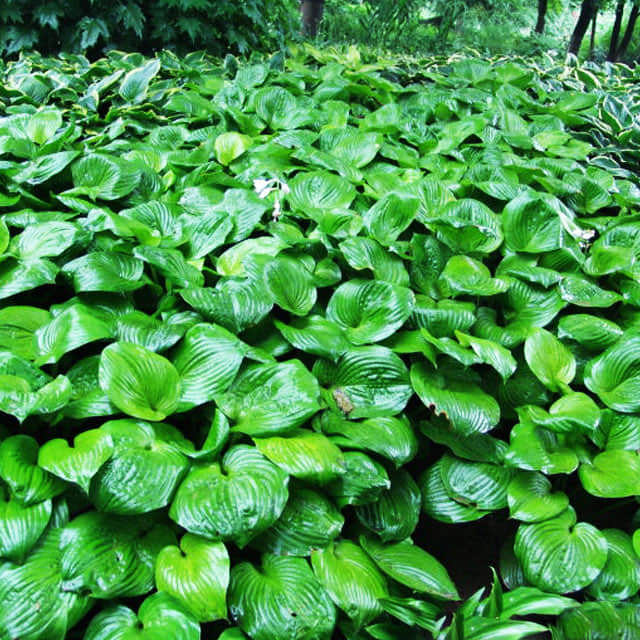
As a species native to shaded, moist environments in Korea, Hosta venusta has thin, delicate leaves that lose turgor pressure rapidly when soil moisture drops. Drooping is the plant's primary mechanism to reduce surface area for transpiration during dry spells.
Excessive moisture in poorly draining soil can lead to fungal pathogens attacking the root system of Hosta venusta. This prevents the roots from absorbing water, causing the leaves to wilt even when the soil appears wet.
Despite being shade-loving, extreme temperature spikes can cause Hosta venusta leaves to wilt as a defense mechanism. This is often accompanied by slight bleaching of the leaf edges if the sun exposure is too intense.
Large gastropod feeding can remove significant leaf tissue, disrupting the plant's vascular structure and causing localized or systemic drooping. Hosta venusta's tender foliage is a preferred food source for these pests.
Your plant might also be experiencing one of these issues:

 English
 Italiano