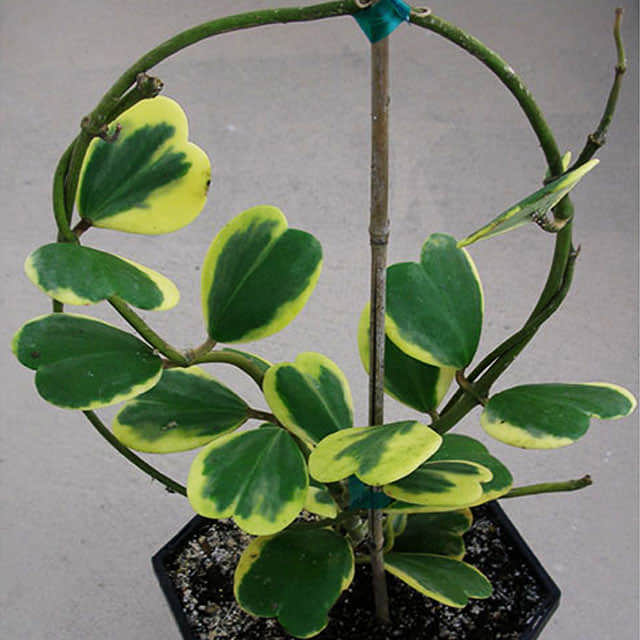
Hoya kerrii Sticky Leaves
eco Sticky Leaves

Hoya kerrii – Sticky Leaves

Why does your Hoya kerrii have sticky leaves? Diagnose the cause and fix it with our step-by-step guide.

search Possible Causes

error

Scale Insects

Scale insects attach themselves to the fleshy leaves of the Hoya kerrii and suck sap, excreting a sugary substance known as honeydew. This residue is characteristically sticky and can lead to the growth of black sooty mold.

Very Common
lightbulb
How to confirm: Inspect the undersides of the thick leaves for small, brownish, bump-like organisms that do not move when touched.
build How to fix it
shopping_cart Recommended Products
1 Treat the plant with an organic insecticide to eliminate the scale insects and prevent further honeydew production.
2 Wipe the leaves with a damp cloth to remove the sticky residue and any developing sooty mold.
3 Inspect the undersides of leaves and stems for any remaining insect crawlers or scale bodies.
error

Mealybugs

These soft-bodied pests feed on the sap of the plant and produce honeydew as a byproduct. In Hoya species, they often hide in the crevices where the leaf meets the stem.

Very Common
lightbulb
How to confirm: Look for tiny, white, cottony masses nestled in the leaf axils or along the stems.
build How to fix it
shopping_cart Recommended Products
1 Isolate the plant immediately to prevent the spread of mealybugs to other houseplants.
2 Treat the affected areas by spraying the plant with an organic insecticide to eliminate existing pests and larvae.
3 Wipe the sticky leaves and crevices with a cotton swab dipped in isopropyl alcohol to remove visible mealybugs and honeydew residue.
warning

Aphid Infestation

Aphids congregate on new growth and tender parts of the Hoya kerrii to feed, leaving behind a sticky residue. They can cause the characteristic thick leaves to become distorted or curled.

Common
lightbulb
How to confirm: Check for small, pear-shaped insects, often green or black, clustered on the newest leaf tips.
build How to fix it
shopping_cart Recommended Products
1 Spray the plant thoroughly with an organic insecticide to eliminate the aphid population and stop the production of honeydew.
2 Wipe the leaves with a damp cloth to remove the sticky residue and prevent the growth of sooty mold.
3 Inspect new growth and the undersides of leaves regularly to ensure pests do not return.
warning

Excessive Liquid Fertilizer Residue

If liquid fertilizer is applied directly to the foliage rather than the soil, dried mineral and nutrient salts can create a tacky surface residue. This is common in Hoyas if over-fertilized during active growth periods.

Common
lightbulb
How to confirm: Wipe a leaf with a damp cloth; if the stickiness disappears and no insects are found, it is likely residue.
build How to fix it
shopping_cart Recommended Products
1 Gently wipe the leaves with a soft, damp cloth to remove the sticky fertilizer residue and prevent mineral buildup.
2 Flush the soil with room temperature water to wash away any excess fertilizer salts that may be accumulating in the root zone.
3 Ensure future liquid fertilizer applications are diluted and applied only to the soil, avoiding direct contact with the foliage.
local_hospital All symptoms eco All plants with sticky leaves
favorite