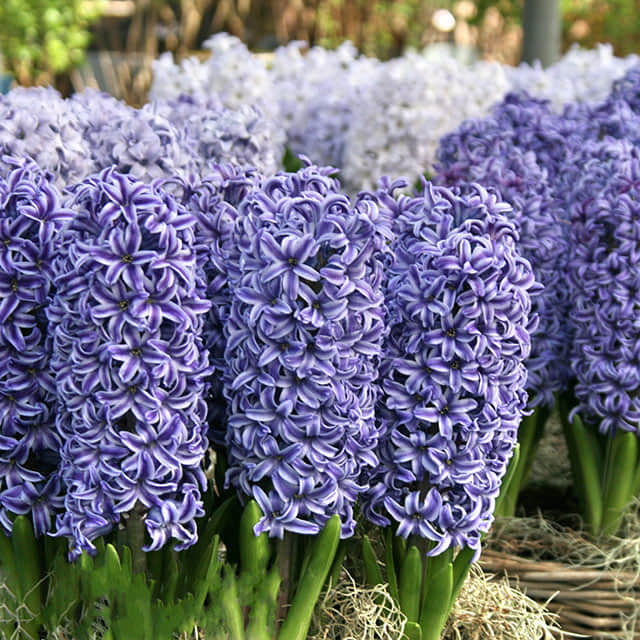
Why does your Hyacinthus orientalis Blue Jacket have tiny black flies? Diagnose the cause and fix it with our step-by-step guide.
The larvae of these flies live in the organic matter of the potting soil and feed on decaying roots or fungal mycelium. In Hyacinths, high moisture levels required for bulb health often create the perfect breeding ground for these pests.
The presence of flies is often an indicator of over-saturated soil and decomposing organic material within the bulb container. As the Hyacinth bulb nutrients are used, the surrounding medium can become a site for microbial activity that attracts scavengers.
While not the direct cause of the flies, rot in the Hyacinth bulb creates a decaying scent that attracts various small dipterans. If the blue flower stalks begin to wilt prematurely despite moist soil, the flies are likely following a fungal breakdown.

 English
 Italiano