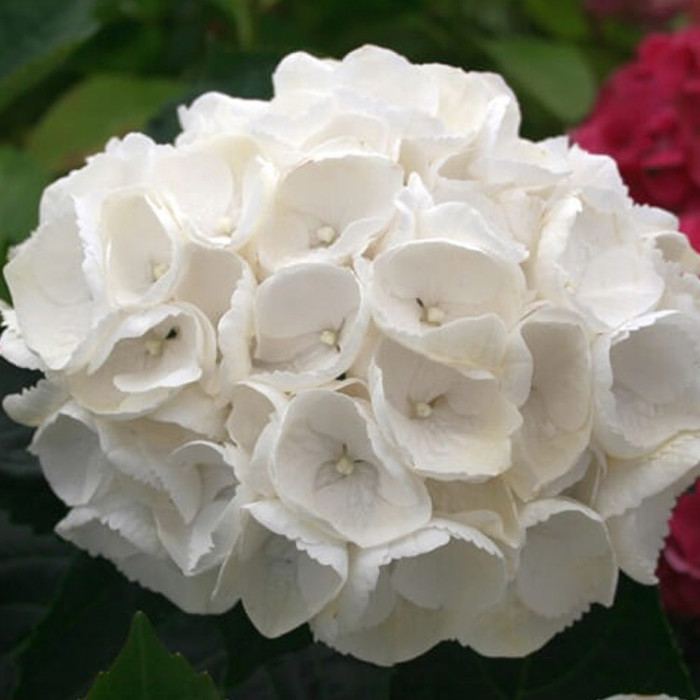
Hydrangea macrophylla Magical Bride Sudden Leaf Drop
eco Sudden Leaf Drop

Hydrangea macrophylla Magical Bride – Sudden Leaf Drop

Why does your Hydrangea macrophylla Magical Bride have sudden leaf drop? Diagnose the cause and fix it with our step-by-step guide.

search Possible Causes

error

Water Stress (Drought or Overwatering)

Hydrangeas have large, thin leaves with high transpiration rates; sudden leaf drop is a primary defense mechanism when the roots are either desiccated by drought or suffocating from anaerobic conditions caused by waterlogged soil.

Very Common
lightbulb
How to confirm: Insert your finger 2 inches into the soil to check if it is bone dry or excessively muddy/saturated.
build How to fix it
shopping_cart Recommended Products
1 Check the soil moisture level at the root zone using a moisture meter to determine if the soil is bone-dry or waterlogged.
2 If the soil is dry, deeply water the plant until water drains from the bottom; if the soil is soggy, allow it to dry out completely before next watering.
3 Ensure the plant is in a well-draining container or soil mix to prevent anaerobic conditions, and use a saucer to catch excess water.
error

Environmental Shock (Temperature Fluctuations)

Magical Bride Hydrangeas are sensitive to rapid changes in temperature, particularly sudden cold snaps or extreme heat waves, which can trigger a stress response resulting in abscission.

Very Common
lightbulb
How to confirm: Check for recent weather shifts such as late spring frosts or a sudden period of intense, unshaded afternoon sun.
build How to fix it
shopping_cart Recommended Products
1 Stabilize the plant's environment by moving it to a sheltered location away from cold drafts or intense direct heat to prevent further temperature-induced stress.
2 Monitor soil moisture levels closely using a moisture meter to ensure the plant remains hydrated but not waterlogged during its recovery phase.
3 Apply a liquid seaweed fertilizer to help the plant recover from environmental stress and boost nutrient uptake.
warning

Root Rot (Phytophthora or Pythium)

Fungal pathogens in poorly draining soil can destroy the root system of Macrophylla cultivars, making it impossible for the plant to support its large foliage canopy.

Common
lightbulb
How to confirm: Gently lift the edge of the root ball to see if the roots are black, slimy, or emit a foul odor.
build How to fix it
shopping_cart Recommended Products
1 Immediately inspect the roots for mushy, dark brown, or foul-smelling decay and prune away any dead tissue using sterilized tools.
2 Repot the plant in a highly aerated, well-draining medium to prevent further fungal growth; consider adding perlite to improve drainage.
3 Apply a fungicide to combat the pathogens and ensure the plant is in a container with excellent drainage, such as a pot with a drainage tray.
warning

Nutrient Deficiency (Nitrogen or Magnesium)

While less likely to cause 'sudden' drop compared to water issues, a severe lack of mobile nutrients can lead to chlorosis and subsequent leaf shedding as the plant reallocates resources.

Common
lightbulb
How to confirm: Inspect the older leaves for yellowing between the veins (interveinal chlorosis) before the drop occurs.
build How to fix it
shopping_cart Recommended Products
1 Check the soil moisture levels immediately using a moisture meter to rule out water stress, as sudden leaf drop is more commonly caused by drought or overwatering.
2 Apply a balanced liquid fertilizer to address potential nitrogen or magnesium deficiencies and help the plant recover nutrient levels.
3 Supplement the soil with organic worm castings to improve long-term nutrient availability and soil health.

Other Hydrangea macrophylla Magical Bride problems

Your plant might also be experiencing one of these issues:

local_hospital All symptoms eco All plants with sudden leaf drop
favorite