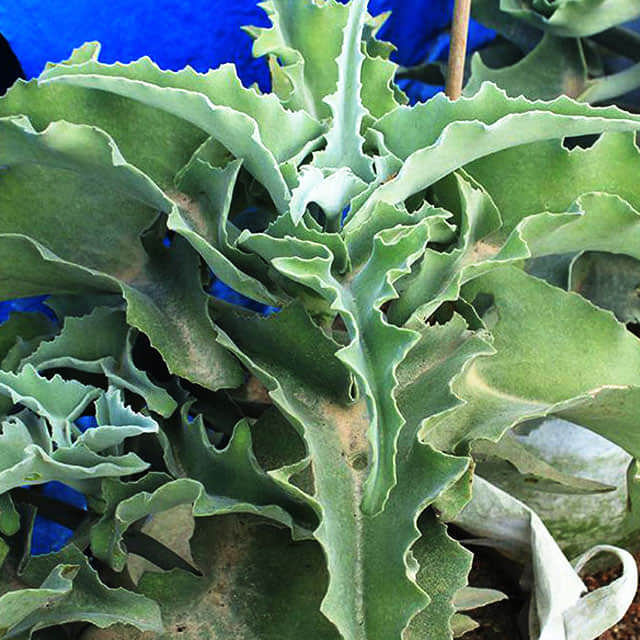
Why does your Kalanchoe beharensis have yellow leaves? Diagnose the cause and fix it with our step-by-step guide.
As a succulent, Kalanchoe beharensis is highly susceptible to fungal pathogens like Phytophthora if the substrate stays damp. Excessive moisture causes root decay, which prevents the plant from transporting water and nutrients, leading to chlorosis (yellowing) of the felted leaves.
A lack of nitrogen prevents the production of chlorophyll, causing older leaves to turn yellow. In Kalanchoe species, this often manifests as a progressive loss of the characteristic silver-grey color in favor of a pale yellow tint.
Kalanchoe beharensis requires bright, indirect light to maintain its metabolic processes. Insufficient light can lead to chlorosis as the plant cannot sustain enough chlorophyll production for its large, structural leaves.
Extreme fluctuations or exposure to cold drafts can shock the succulent's cells. Sudden drops in temperature can cause the thick, velvety leaves to lose their structural integrity and turn yellow/translucent.
Your plant might also be experiencing one of these issues:

 English
 Italiano