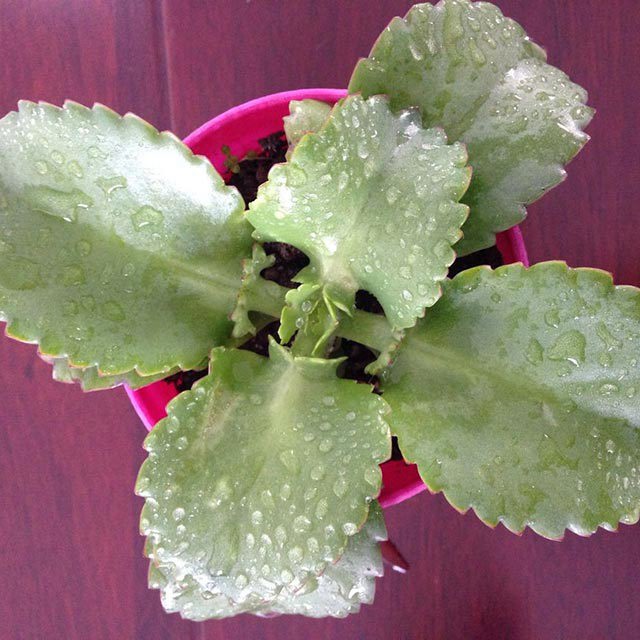
Why does your Kalanchoe daigremontiana have tiny black flies? Diagnose the cause and fix it with our step-by-step guide.
The tiny black flies are likely the adult stage of fungus gnats, which thrive in the consistently moist organic matter required by Kalanchoe. Their larvae feed on fungal mycelium and fine root hairs, which can weaken the plant's ability to anchor its succulent leaves.
Overwatering Kalanchoe daigremontiana causes root decay, creating a moist, decaying environment that attracts fungus gnats and other small flies. The presence of flies often indicates that the soil moisture levels are too high for this succulent species.
If there is fermenting organic matter in the potting mix or nearby decaying plant debris, fruit flies may be attracted to the pot. While less common than fungus gnats, they can appear if the Kalanchoe is kept in a high-humidity environment with decaying leaves.
Your plant might also be experiencing one of these issues:

 English
 Italiano