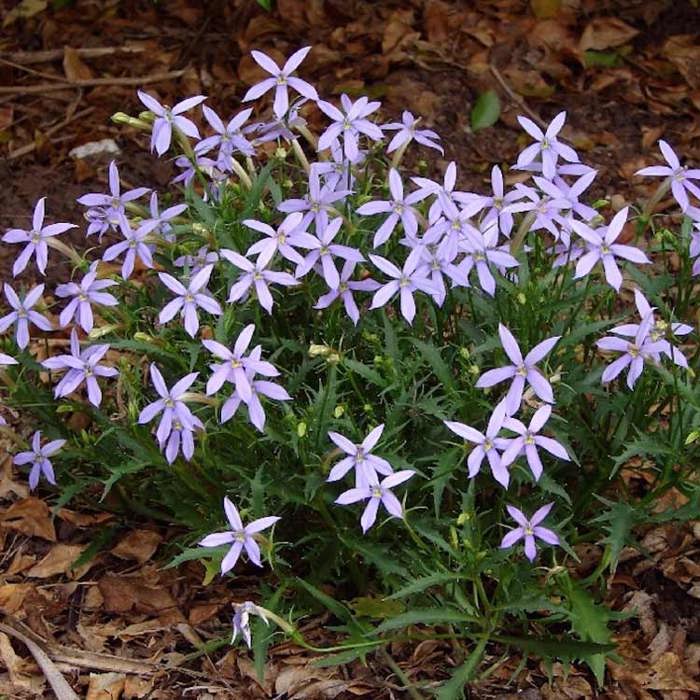
| Common Name | Blue Star Creeper |
| Family | Campanulaceae |
| Genus | Laurentia |
| Species | Axillaris |
| Origin | Australia |
| Blooming | Spring to Autumn, often year-round in tropics |
| Leaf Color | Dark green |
| Sunlight | Shade / Half-shade |
| Category | Indoor plants |
| Pet Friendly | Yes |
Pet-safety information is provided as guidance only. Always verify with your veterinarian before choosing a plant if you have pets.
Well-draining potting mix with organic matter; slightly acidic to neutral pH preferred
Keep soil consistently moist during growth; reduce watering in winter dormancy, avoid waterlogging
Full sun for maximum flowering intensity; tolerates partial shade but may become leggy
Apply balanced liquid fertilizer every 2 weeks during active growing season (Spring to Autumn)
Regularly deadhead spent flowers to encourage new blooms and pinch tips for bushier growth
These are the insects and pathogens that commonly interact with this plant, including pests, parasites, and organisms typically associated with its care.

 English
 Italiano