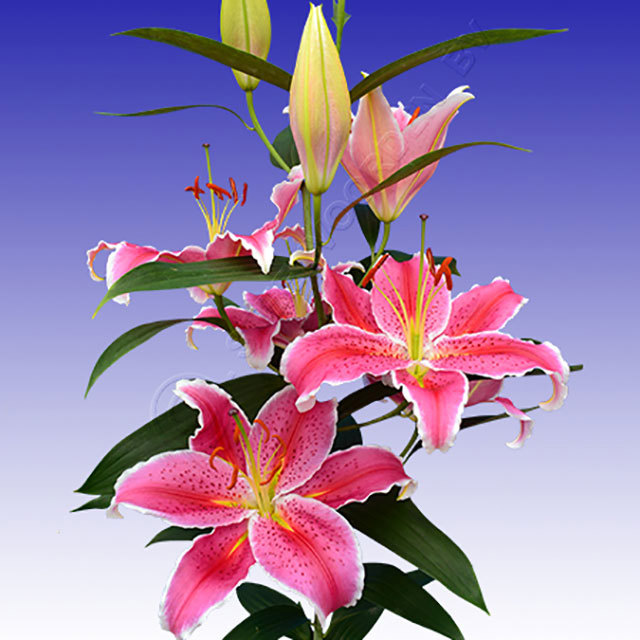
Why does your Lilium orientale La Mancha have yellow leaves? Diagnose the cause and fix it with our step-by-step guide.
This fungal pathogen thrives in the humid conditions preferred by Oriental lilies. It causes leaves to turn yellow and eventually develop brown, water-soaked spots that lead to rapid senescence.
Oriental lilies are susceptible to bulb rot if the soil does not drain well. Excessive moisture prevents oxygen from reaching the roots, causing the foliage to lose chlorophyll and turn yellow starting from the bottom leaves.
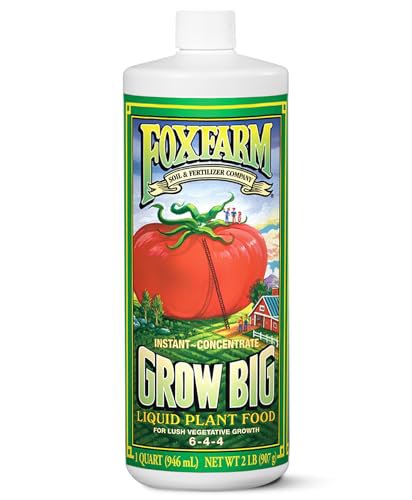
Large-flowered cultivars like 'La Mancha' require significant nutrient uptake to support their heavy blooms. A lack of nitrogen results in uniform yellowing across the older, lower leaves as the plant mobilizes nutrients upward.
Imbalances in micronutrients, particularly magnesium or iron, can manifest as interveinal chlorosis in Oriental lilies. This is often exacerbated by high soil pH which locks these nutrients away from the plant.
Your plant might also be experiencing one of these issues:

 English
 Italiano