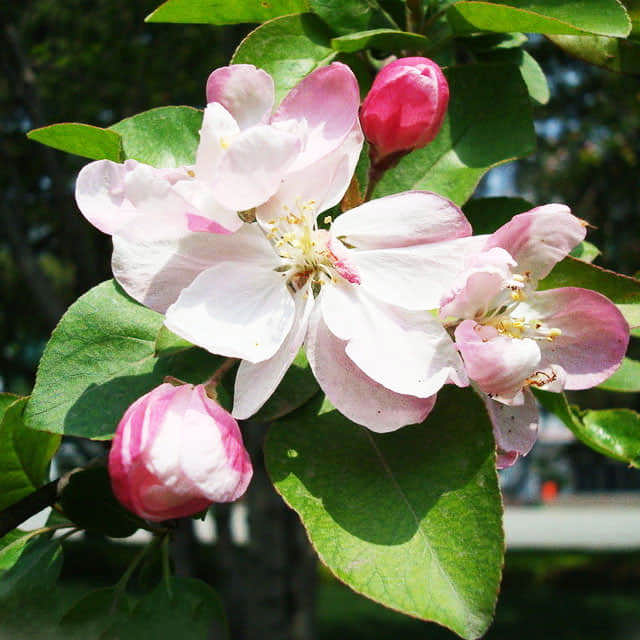
Why does your Malus hupehensis have white powder? Diagnose the cause and fix it with our step-by-step guide.
This is the most common cause of white, flour-like patches on Malus species. The fungus thrives in high humidity and moderate temperatures, coating leaves, stems, and buds with a white mycelial mat.
While primarily known for dark olive spots, early stages of infection on Hupeh Crabapple leaves can appear as pale, velvety, or whitish patches before turning necrotic.
Small, soft-bodied insects covered in a white, waxy secretion can mimic the appearance of powder, particularly in the crevices of leaves and stems.
Extremely fine webbing produced by spider mites can create a whitish, dusty appearance on the undersides of Malus leaves, often accompanied by stippling.

 English
 Italiano