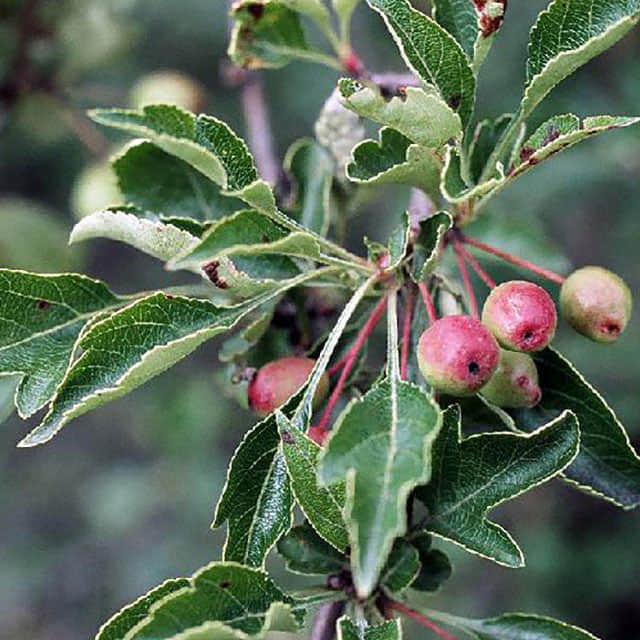
Why does your Malus toringoides have white powder? Diagnose the cause and fix it with our step-by-step guide.
This is the most common fungal pathogen for Malus species, characterized by a distinct white, talcum-like fungal growth on leaves, stems, and buds. High humidity and poor air circulation around the crabapple canopy create ideal conditions for this fungus to spread.
Small, soft-bodied insects that secrete a white, waxy/powdery substance to protect themselves. They tend to congregate in the crevices of the bark or on the undersides of Malus leaves, often accompanied by sticky honeydew residue.
While typically presenting as dark olive spots, early infections can sometimes appear as lighter, fuzzy patches on the surface of developing fruit or leaves before they darken and become necrotic.

 English
 Italiano