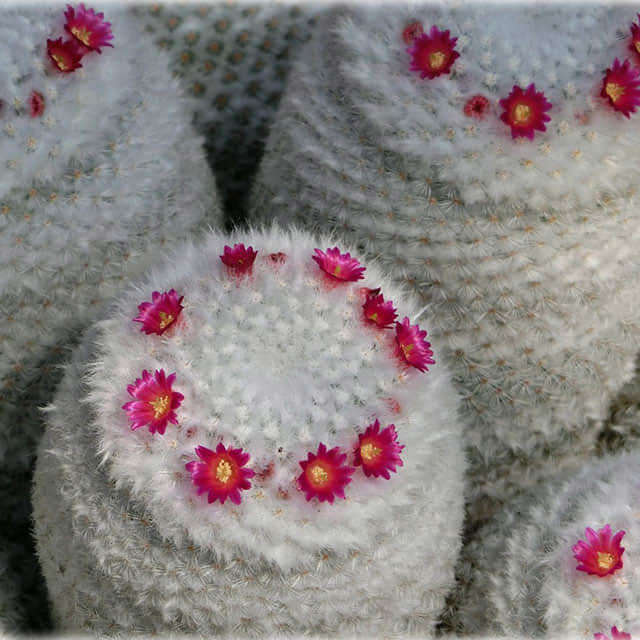
Mammillaria albilanata White Cottony Spots
eco White Cottony Spots

Mammillaria albilanata – White Cottony Spots

Why does your Mammillaria albilanata have white cottony spots? Diagnose the cause and fix it with our step-by-step guide.

search Possible Causes

error

Mealybug Infestation

Mealybugs are small, soft-bodied insects that secrete a white, waxy, cottony substance to protect themselves. In Mammillaria species, they often hide deep within the areoles (the bumps where spines emerge) and suck the sap from the cactus body.

Very Common
lightbulb
How to confirm: Use a toothpick to gently probe the white spots; if they move or break into a powdery residue, it is likely mealybugs.
build How to fix it
shopping_cart Recommended Products
1 Isolate the cactus immediately from other plants to prevent the mealybugs from spreading to your entire collection.
2 Carefully remove visible mealybugs using a cotton swab dipped in isopropyl alcohol, making sure to reach deep into the areoles.
3 Apply an organic insecticide spray to the entire plant to eliminate any remaining pests and larvae.
warning

Cottony Scale

Similar to mealybugs, scale insects can produce white, felt-like coverings. These pests attach themselves to the cactus skin and feed on the plant's fluids, potentially causing yellowing or scarring on the Mammillaria stem.

Common
lightbulb
How to confirm: Check if the white spots are firmly attached to the plant body rather than loose like dust.
build How to fix it
shopping_cart Recommended Products
1 Isolate the cactus from other plants immediately to prevent the spread of scale insects.
2 Carefully remove visible white cottony spots using a cotton swab dipped in isopropyl alcohol to kill the insects on contact.
3 Apply an organic insecticide spray to the entire plant to eliminate any remaining larvae or hidden pests.
warning

Fungal Mycelium (Mold)

Excessive humidity or poor air circulation around the Mammillaria can lead to fungal growth, such as Botrytis. The white spots may actually be fungal hyphae spreading across the surface of the cactus.

Common
lightbulb
How to confirm: Observe if the white patches are accompanied by soft, mushy areas on the cactus skin which indicate decay.
build How to fix it
shopping_cart Recommended Products
1 Increase air circulation around the cactus by using a small fan or moving it to a more ventilated area to reduce humidity.
2 Carefully remove the visible fungal growth using a cotton swab dipped in isopropyl alcohol, being careful not to damage the cactus skin.
3 Adjust your watering schedule to ensure the soil dries out completely between waterings, and use a moisture meter to monitor the substrate.
warning

Calcium/Mineral Deposits

If hard water is used for irrigation, dried mineral salts can accumulate on the surface of the cactus. These often appear as white, crusty patches that do not move.

Common
lightbulb
How to confirm: Wipe a spot with a damp cloth; if it dissolves or disappears easily without leaving a residue, it is likely mineral buildup.
build How to fix it
shopping_cart Recommended Products
1 Gently wipe the white crusty patches from the cactus surface using a soft, damp cloth or a cotton swab with distilled water to remove mineral buildup.
2 Switch to using distilled water, rainwater, or filtered water for future irrigation to prevent new calcium and mineral deposits from accumulating.
3 Monitor soil moisture levels closely to ensure you are not overwatering, which can exacerbate mineral salt accumulation.

Other Mammillaria albilanata problems

Your plant might also be experiencing one of these issues:

local_hospital All symptoms eco All plants with white cottony spots
favorite

