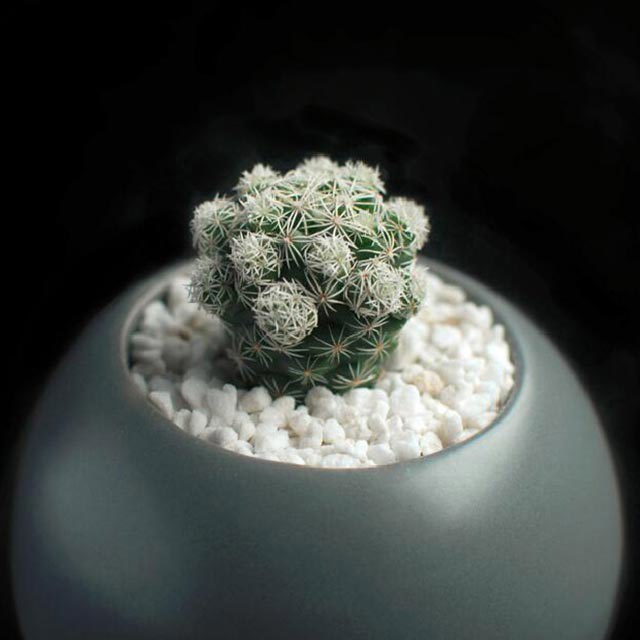
Why does your Mammillaria gracilis have sticky leaves? Diagnose the cause and fix it with our step-by-step guide.
Scale insects attach themselves to the body of the Mammillaria, secreting 'honeydew,' a sticky, sugary substance that coats the cactus. This residue can attract sooty mold and is often accompanied by small, bump-like bumps on the cactus skin.
Mealybugs produce honeydew as they feed on the cactus sap, resulting in a sticky surface. These pests are often found tucked deep within the areoles (the small bumps where spines emerge) of the Spider Cactus.
Aphids feed on the succulent tissue of the cactus, excreting excess sugars in the form of sticky honeydew. This is more common if the plant is kept in a high-humidity environment or near other vulnerable houseplants.
If the cactus skin has been physically damaged by tools or pests, it may leak internal fluids that dry into a sticky residue. While less common for this species than insects, physical trauma can trigger this exudation.
Your plant might also be experiencing one of these issues:

 English
 Italiano