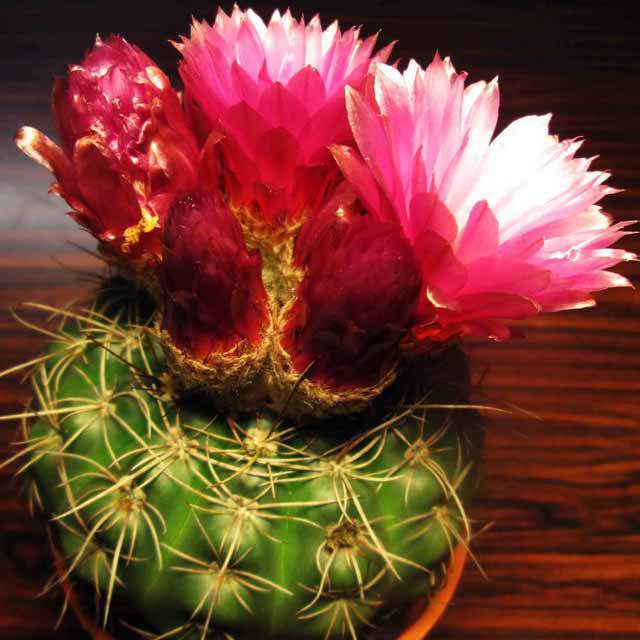
Notocactus uebelmannianus White Cottony Spots
eco White Cottony Spots

Notocactus uebelmannianus – White Cottony Spots

Why does your Notocactus uebelmannianus have white cottony spots? Diagnose the cause and fix it with our step-by-step guide.

search Possible Causes

error

Mealybugs

These small, sap-sucking insects produce a white, waxy, cottony secretion to protect themselves while feeding on the cactus flesh. They often congregate in the areoles (the bumps where spines grow) of the Notocactus uebelmannianus.

Very Common
lightbulb
How to confirm: Use a magnifying glass or smartphone zoom to check if the white spots move or are attached to tiny, crawling insects near the spine bases.
build How to fix it
shopping_cart Recommended Products
1 Isolate the cactus from other plants immediately to prevent the mealybugs from spreading to your entire collection.
2 Carefully remove visible mealybugs using a cotton swab dipped in isopropyl alcohol, paying close attention to the areoles.
3 Apply an organic insecticide spray to the cactus to eliminate any remaining insects and larvae.
warning

Cottony Scale

Scale insects can appear as white, fuzzy masses that embed themselves into the cactus skin. Unlike mealybugs, they are more sedentary and can cause localized yellowing or scarring on the golden epidermis.

Common
lightbulb
How to confirm: Try to gently scrape a spot with a fingernail; if it is a hard, crusty mass rather than loose fluff, it is likely scale.
build How to fix it
shopping_cart Recommended Products
1 Treat the cactus with an organic insecticide spray to eliminate the scale insects and their eggs.
2 Carefully remove visible white masses using a cotton swab dipped in isopropyl alcohol to prevent further spreading.
3 Isolate the cactus from other plants to prevent the scale from migrating to your healthy greenery.
warning

Powdery Mildew

While less common on succulent cacti like Notocactus than on leafy plants, high humidity can trigger fungal growth that appears as a white, dusty coating. This usually presents as a surface film rather than distinct cottony clumps.

Common
lightbulb
How to confirm: Wipe the spot with a damp cloth; if the white substance disappears easily and leaves no scarring, it is likely a superficial fungal issue.
build How to fix it
shopping_cart Recommended Products
1 Apply an organic fungicide to the affected areas to eliminate the powdery mildew spores and prevent further spread.
2 Improve air circulation around the cactus and reduce humidity levels to create an environment less conducive to fungal growth.
3 Gently wipe the cactus surface with a soft, dry brush to remove visible fungal residue without damaging the plant skin.
local_hospital All symptoms eco All plants with white cottony spots
favorite

