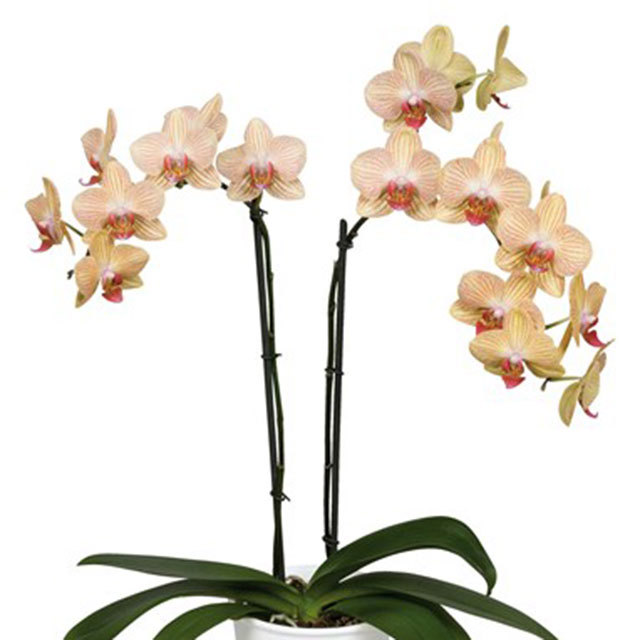
Phalaenopsis Alghero Sudden Leaf Drop
eco Sudden Leaf Drop

Phalaenopsis Alghero – Sudden Leaf Drop

Why does your Phalaenopsis Alghero have sudden leaf drop? Diagnose the cause and fix it with our step-by-step guide.

search Possible Causes

error

Root Rot (Phytophthora/Pythium)

Overwatering or poor drainage causes the roots to suffocate and decay, preventing the orchid from transporting water to the leaves. As the root system fails, the plant sheds leaves as a survival mechanism to reduce transpiration.

Very Common
lightbulb
How to confirm: Gently lift the orchid from its pot to check if the roots are brown, mushy, or hollow instead of firm and green/white.
build How to fix it
shopping_cart Recommended Products
1 Immediately remove the orchid from its current medium and prune away all mushy, brown, or blackened roots using sterilized shears.
2 Repot the orchid in a fresh, highly aerated medium like organic orchid bark to ensure proper drainage and oxygen flow to the remaining healthy roots.
3 Monitor the moisture levels of the new substrate closely using a moisture meter to prevent future overwatering and root suffocation.
error

Temperature Shock

Phalaenopsis orchids are tropical plants that thrive in stable warmth; sudden exposure to cold drafts or a rapid drop in temperature can trigger an emergency physiological response resulting in leaf abscission.

Very Common
lightbulb
How to confirm: Check if the plant has been placed near an open window, air conditioning vent, or in a room with significant night-time temperature fluctuations.
build How to fix it
shopping_cart Recommended Products
1 Immediately move the orchid to a stable, warm environment away from cold drafts, air conditioning vents, or windows.
2 Maintain a consistent temperature between 65°F and 80°F to prevent further physiological stress.
3 Check the substrate moisture levels to ensure the roots are not sitting in cold, waterlogged medium, which can exacerbate shock.
warning

Bacterial Soft Rot (Erwinia)

A bacterial infection can rapidly degrade plant tissue, often starting at the base of the leaf or near the crown. As the infection spreads through the vascular system, the plant may drop leaves to isolate the necrotic tissue.

Common
lightbulb
How to confirm: Inspect the base of the fallen leaves and the stem for any dark, water-soaked, or foul-smelling lesions.
build How to fix it
shopping_cart Recommended Products
1 Immediately prune away all infected, mushy, or necrotic leaves and plant tissue using sterilized cutting tools to prevent the bacteria from spreading to the crown.
2 Apply a fungicide to the affected areas to combat the bacterial spread and ensure the plant is in a well-ventilating environment with low humidity.
3 Repot the orchid in a fresh, sterile medium to remove any contaminated substrate that may be harboring the bacteria.
warning

Extreme Desiccation

If the potting medium has become completely bone-dry for an extended period, the orchid may shed older leaves to conserve moisture for the new growth and the crown.

Common
lightbulb
How to confirm: Feel the inside of the orchid's pseudobulbs or stem area; if it feels significantly shriveled and the medium is dusty, dehydration is likely.
build How to fix it
shopping_cart Recommended Products
1 Immediately rehydrate the orchid by soaking the pot in water for 15-20 minutes, ensuring the medium is fully saturated.
2 Check the moisture levels of the substrate regularly using a moisture meter to prevent future bone-dry periods.
3 Repot the orchid in a fresh, moisture-retentive medium like orchid bark to improve water holding capacity.

Other Phalaenopsis Alghero problems

Your plant might also be experiencing one of these issues:

local_hospital All symptoms eco All plants with sudden leaf drop
favorite