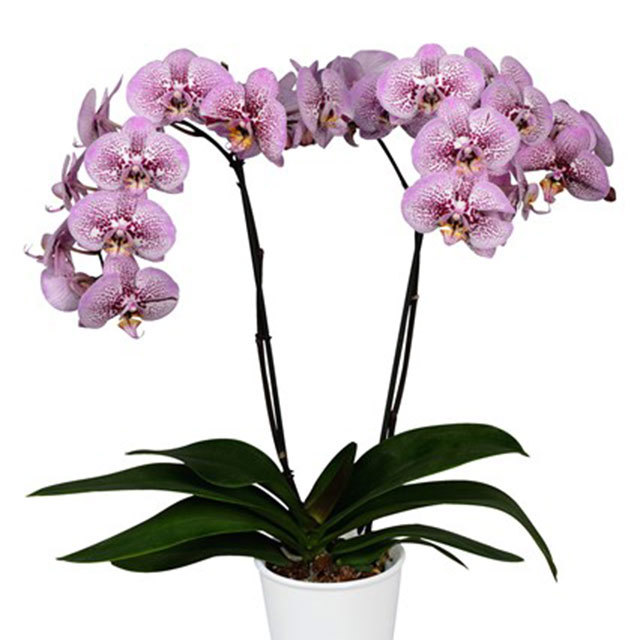
Phalaenopsis Andorra Drooping Leaves
eco Drooping Leaves

Phalaenopsis Andorra – Drooping Leaves

Why does your Phalaenopsis Andorra have drooping leaves? Diagnose the cause and fix it with our step-by-step guide.

pets Pet Friendly

search Possible Causes

error

Root Rot (Overwatering)

Excessive moisture in the substrate causes the roots of your Phalaenopsis Andorra to suffocate and decay, preventing them from absorbing water to support leaf turgidity. This is the most common cause of wilting in moth orchids.

Very Common
lightbulb
How to confirm: Gently lift the plant to inspect the roots; healthy roots should be firm and green/silvery, while rotting roots will be brown, mushy, and hollow.
build How to fix it
shopping_cart Recommended Products
1 Immediately remove the orchid from its current substrate and inspect the roots; trim away any mushy, black, or smelly roots using sterilized shears.
2 Repot the orchid in a fresh, well-draining medium specifically designed for epiphytes to ensure proper aeration and prevent future suffocation.
3 Use a moisture meter to monitor the substrate, ensuring you only water when the medium has significantly dried out to avoid repeating the overwatering cycle.
error

Dehydration (Underwatering)

If the orchid medium has dried out completely for an extended period, the plant lacks the hydraulic pressure needed to keep leaves upright. This often leads to a characteristic wrinkling of the leaf surface.

Very Common
lightbulb
How to confirm: Check the weight of the pot; if it feels unusually light and the medium is bone-dry, the plant likely needs a thorough soak.
build How to fix it
shopping_cart Recommended Products
1 Check the current moisture level of the orchid medium using a moisture meter to confirm the extent of dehydration.
2 Thoroughly soak the orchid medium with water to restore hydraulic pressure to the leaves, ensuring the substrate is fully saturated.
3 Repot the orchid in fresh, well-draining medium like orchid bark to improve moisture retention and root health.
warning

Temperature Stress

Phalaenopsis orchids are tropical plants that thrive in stable warmth; exposure to sudden cold drafts or temperatures below 15°C (60°F) can cause metabolic shutdown and leaf drooping.

Common
lightbulb
How to confirm: Monitor if the drooping coincides with recent placement near a window, air conditioner vent, or drafty door.
build How to fix it
shopping_cart Recommended Products
1 Relocate your orchid to a stable, warm environment away from cold drafts, air conditioning vents, or windows that may drop below 15°C (60°F).
2 Monitor the soil temperature and moisture levels to ensure the roots are not experiencing thermal shock; use a moisture meter to prevent overwatering during periods of metabolic slowdown.
3 If the plant is in a particularly chilly area, consider using a grow light to provide supplemental warmth and light energy to help the plant recover.
warning

Nutrient Deficiency (Nitrogen/Magnesium)

A lack of essential macronutrients in the orchid bark or sphagnum moss can weaken the plant's structural integrity over time, leading to limp, pale leaves.

Common
lightbulb
How to confirm: Observe if the drooping is accompanied by yellowing (chlorosis) of older leaves despite adequate watering.
build How to fix it
shopping_cart Recommended Products
1 Apply a balanced liquid fertilizer to provide immediate nitrogen and magnesium support to the orchid's roots.
2 Refresh the orchid's growing medium with fresh, nutrient-rich bark to ensure long-term availability of essential minerals.
3 Monitor the moisture levels of the substrate using a moisture meter to ensure the deficiency isn't being exacerbated by improper watering.

Other Phalaenopsis Andorra problems

Your plant might also be experiencing one of these issues:

local_hospital All symptoms eco All plants with drooping leaves
favorite