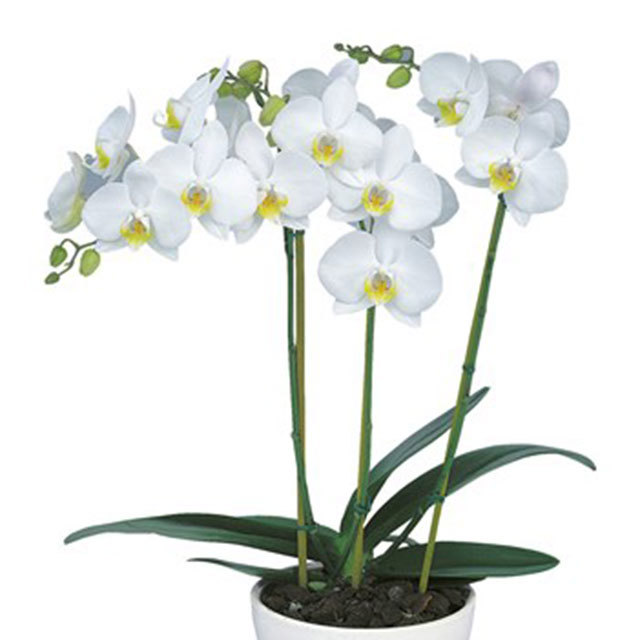
Phalaenopsis Casablanca White Powder
eco White Powder

Phalaenopsis Casablanca – White Powder

Why does your Phalaenopsis Casablanca have white powder? Diagnose the cause and fix it with our step-by-step guide.

search Possible Causes

error

Powdery Mildew (Podosphaera takashimae)

This fungal pathogen thrives in high humidity and poor air circulation around the orchid's leaves. It manifests as a white, flour-like coating that can eventually lead to leaf necrosis.

Very Common
lightbulb
How to confirm: Look for a dusty texture on the leaf surface that can be rubbed off with your finger.
build How to fix it
shopping_cart Recommended Products
1 Apply an organic fungicide to the affected leaves to eliminate the fungal spores and prevent further spread.
2 Improve air circulation around the orchid by using a small fan and ensure the plant is not in a high-humidity pocket without airflow.
3 Prune and discard any heavily infected leaves to prevent the pathogen from spreading to healthy foliage.
error

Mealybugs

These small, soft-bodied insects secrete a white, waxy substance that looks like powdery residue. They congregate in the leaf axils and root junctions of the Phalaenopsis to suck sap.

Very Common
lightbulb
How to confirm: Inspect the crevices between leaves for tiny, moving white specs or sticky residue (honeydew).
build How to fix it
shopping_cart Recommended Products
1 Isolate the orchid immediately to prevent the spread of mealybugs to other plants and treat the infestation with an organic insecticide spray.
2 Use a cotton swab dipped in isopropyl alcohol to manually remove visible white waxy clusters from leaf axils and root junctions.
3 Ensure the orchid is in a well-draining medium like orchid bark to prevent the damp conditions that pests prefer.
warning

Mineral Deposits (Hard Water Residue)

Calcium and magnesium from tap water can precipitate on the leaf surface as the water evaporates. This is common in Phalaenopsis if water is splashed onto the foliage during watering.

Common
lightbulb
How to confirm: Check if the white spots are crusty, irregular, and do not appear to be spreading or causing soft spots.
build How to fix it
shopping_cart Recommended Products
1 Gently wipe the leaves with a soft, damp cloth using distilled or filtered water to remove the mineral buildup without damaging the foliage.
2 Switch to using rainwater or distilled water for future watering to prevent new calcium and magnesium deposits from forming on the leaves.
3 To ensure the orchid's roots are receiving proper hydration without excess mineral accumulation, use a moisture meter to monitor the substrate.
warning

Botrytis Blight (Early Stage)

While typically known for flower rot, Botrytis can present as fuzzy white patches on leaves in very damp conditions. It often starts as a small water-soaked spot that turns grey/white.

Common
lightbulb
How to confirm: Observe if the white areas are accompanied by soft, decaying, or sunken tissue on the leaf.
build How to fix it
shopping_cart Recommended Products
1 Immediately remove and discard any leaves or flowers showing fuzzy white patches to prevent the fungus from spreading to healthy tissue.
2 Apply an organic fungicide to the affected area and surrounding foliage to control the spread of the blight.
3 Improve air circulation around the orchid and reduce humidity to ensure the foliage dries quickly after watering, preventing the damp conditions Botrytis thrives in.

Other Phalaenopsis Casablanca problems

Your plant might also be experiencing one of these issues:

local_hospital All symptoms eco All plants with white powder
favorite