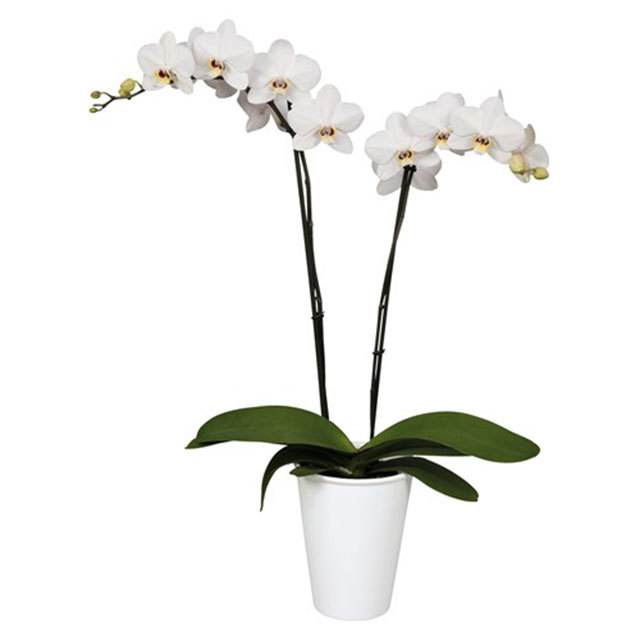
Phalaenopsis Valencia White Cottony Spots
eco White Cottony Spots

Phalaenopsis Valencia – White Cottony Spots

Why does your Phalaenopsis Valencia have white cottony spots? Diagnose the cause and fix it with our step-by-step guide.

pets Pet Friendly

search Possible Causes

error

Mealybug Infestation

Mealybugs are small, soft-bodied insects that secrete a white, waxy, cottony substance to protect themselves. They congregate in the leaf axils and flower spikes of Phalaenopsis orchids to suck sap, leading to stunted growth.

Very Common
lightbulb
How to confirm: Use a magnifying glass or smartphone zoom to check for tiny, moving insects tucked deep within the leaf junctions.
build How to fix it
shopping_cart Recommended Products
1 Isolate the orchid from other plants immediately to prevent the mealybugs from spreading to your entire collection.
2 Treat the infestation by spraying the plant with an organic insecticide or neem oil to kill the insects and remove the waxy coating.
3 Carefully wipe away visible cottony masses using a cotton swab dipped in isopropyl alcohol to destroy the pests on contact.
warning

Cottony Scale

Scale insects can produce white, fuzzy accumulations that mimic cotton. As they feed on the orchid's vascular system, they often leave behind a sticky residue known as honeydew.

Common
lightbulb
How to confirm: Check if there is a sticky substance on the leaves beneath the white spots and look for small, bump-like insect bodies.
build How to fix it
shopping_cart Recommended Products
1 Treat the scale infestation by spraying the orchid with an organic insecticide/miticide to eliminate the pests and their eggs.
2 Manually remove visible scale insects and wipe away sticky honeydew residue using a cotton swab dipped in isopropyl alcohol.
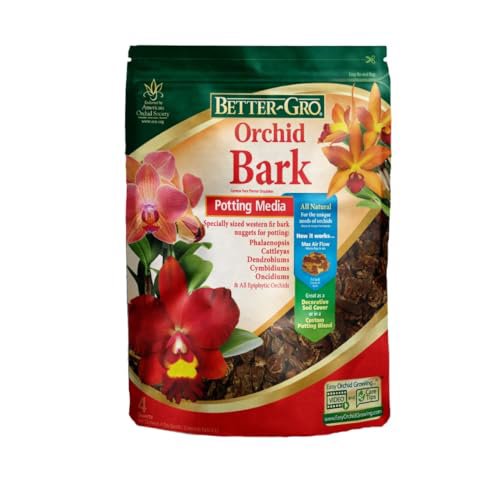
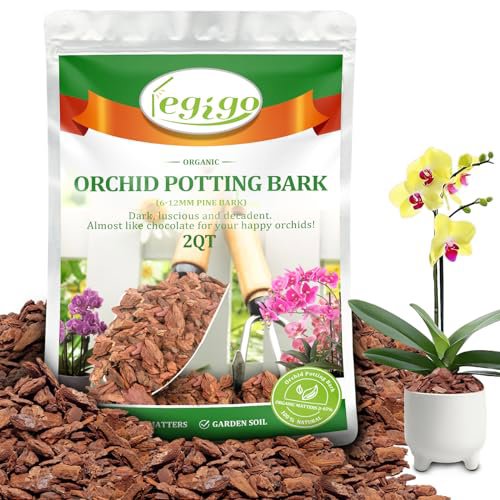
3 Refresh the orchid's growing medium with specialized orchid bark to ensure a clean, well-draining environment that prevents future pest buildup.
warning

Botrytis Blight (Early Stage)

While usually presenting as brown rot, early fungal infections of Phalaenopsis can sometimes appear as fuzzy, light-colored mold patches on decaying organic matter or flower petals.

Common
lightbulb
How to confirm: Inspect if the white spots are accompanied by softening or browning of the petal tissue or leaf edges.
build How to fix it
shopping_cart Recommended Products
1 Immediately remove and discard any affected flower petals or decaying organic matter to prevent the fungal spores from spreading to healthy tissue.
2 Apply an organic fungicide to the plant to control the spread of the blight and protect remaining healthy blooms.
3 Improve air circulation around the orchid and ensure the substrate is well-draining to reduce the humidity that promotes Botrytis growth.
info

Sclerotinia (White Mold)

This fungal pathogen can cause white, cottony mycelium to grow on the base of the orchid leaves or near the rhizome, eventually leading to rapid collapse of the plant tissue.

Rare
lightbulb
How to confirm: Examine the base of the plant and the crown for fuzzy growth spreading toward the healthy leaves.
build How to fix it
shopping_cart Recommended Products
1 Immediately remove and discard any heavily infected plant tissue and use sterilized shears to prune away affected areas to prevent the spread of the fungus.
2 Apply a fungicide to the remaining healthy tissue to control the spread of the white mold.
3 Improve air circulation around the orchid and ensure the potting medium is well-draining to prevent the damp conditions that favor Sclerotinia growth.

Other Phalaenopsis Valencia problems

Your plant might also be experiencing one of these issues:

local_hospital All symptoms eco All plants with white cottony spots
favorite