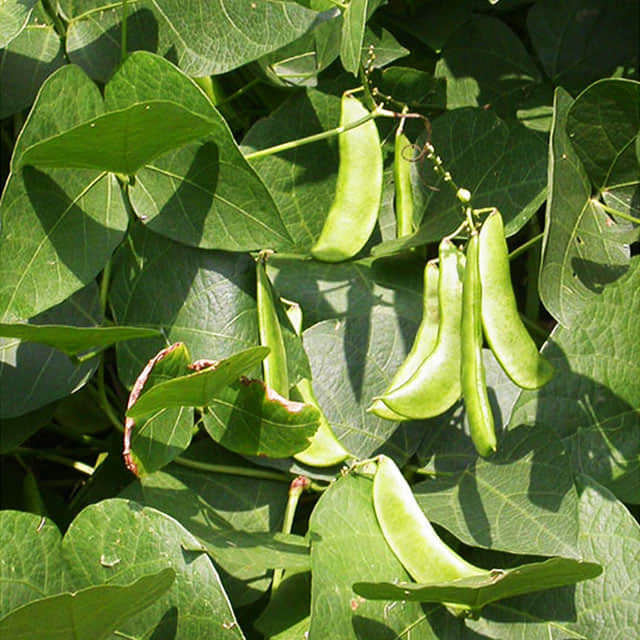
Phaseolus lunatus Buttergreen Bush Fine Webbing
eco Fine Webbing

Phaseolus lunatus Buttergreen Bush – Fine Webbing

Why does your Phaseolus lunatus Buttergreen Bush have fine webbing? Diagnose the cause and fix it with our step-by-step guide.

search Possible Causes

error

Two-Spotted Spider Mite Infestation

Spider mites are highly common in legumes like Lima beans, especially in warm, dry conditions. They pierce plant cells to suck sap, leaving behind fine silk webbing and characteristic stippling (tiny white dots) on the underside of the leaves.

Very Common
lightbulb
How to confirm: Hold a white piece of paper underneath a leaf and tap it to see if tiny crawling specks fall onto the paper.
build How to fix it
shopping_cart Recommended Products
1 Immediately spray the plant, especially the undersides of leaves, with an organic insecticide to kill existing mites and larvae.
2 Increase humidity around the plant and ensure the soil remains moist, as spider mites thrive in hot, dry environments.
3 Prune and dispose of heavily infested or dead leaves to prevent the mites from spreading to healthy parts of the plant.
error

Tetranychus urticae (European Red Mite) Activity

A specific type of spider mite that thrives on bush varieties like Buttergreen. High populations create dense webbing around leaf margins and growing tips, eventually causing leaves to turn yellow and drop.

Very Common
lightbulb
How to confirm: Inspect the newest growth for reddish or orange microscopic dots moving within the webbing.
build How to fix it
shopping_cart Recommended Products
1 Apply an organic miticide or insecticide to eliminate the spider mite population and destroy existing eggs and larvae.
2 Prune and dispose of heavily infested leaves or stems to prevent the webbing from spreading to healthy parts of the plant.
3 Increase humidity around the plant and ensure good airflow, as spider mites thrive in hot, dry conditions.
warning

Thrips Infestation

While thrips are primarily known for scarring, heavy infestations can sometimes be accompanied by silken structures or disturbed leaf surfaces that resemble light webbing. They feed on the tender parenchyma of the bean leaves.

Common
lightbulb
How to confirm: Check for silvery, scarred patches on the leaf surface alongside the presence of very thin, elongated insects.
build How to fix it
shopping_cart Recommended Products
1 Apply an organic insecticide to eliminate the thrips population and disrupt their life cycle.
2 Use yellow sticky traps to capture adult thrips and monitor the severity of the infestation.
3 Inspect the undersides of leaves regularly and wipe away any visible debris or silken structures to reduce pest hiding spots.

Other Phaseolus lunatus Buttergreen Bush problems

Your plant might also be experiencing one of these issues:

local_hospital All symptoms eco All plants with fine webbing
favorite