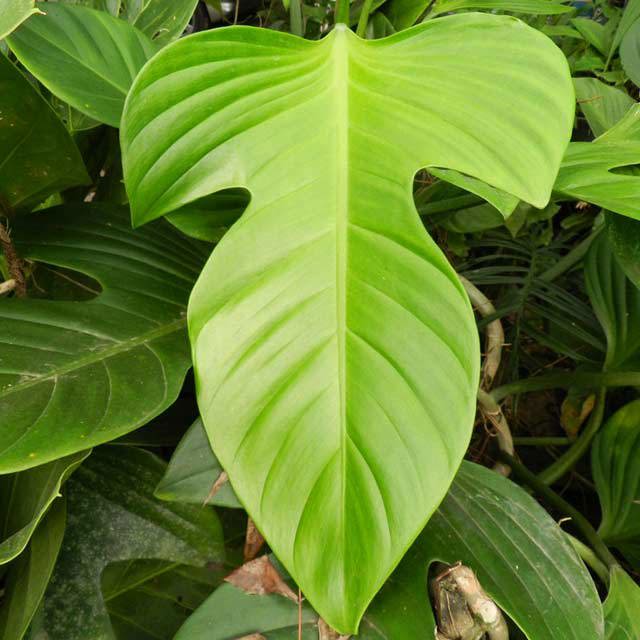
Philodendron panduriforme Fine Webbing
eco Fine Webbing

Philodendron panduriforme – Fine Webbing

Why does your Philodendron panduriforme have fine webbing? Diagnose the cause and fix it with our step-by-step guide.

search Possible Causes

error

Two-Spotted Spider Mite Infestation

Spider mites thrive in the low-humidity environments often found with indoor Philodendrons. They pierce plant cells to feed, leaving behind fine silken webs and causing stippling (tiny white dots) on the panduriforme's broad leaves.

Very Common
lightbulb
How to confirm: Hold a white piece of paper under a leaf and tap it sharply to see if tiny crawling specks fall off.
build How to fix it
shopping_cart Recommended Products
1 Immediately treat the plant with an organic insecticide to eliminate the spider mite population and destroy eggs.
2 Increase local humidity around the Philodendron to make the environment less hospitable for future mite outbreaks.
3 Wipe the leaves with a damp cloth to physically remove webbing and any remaining mites from the leaf surfaces.
warning

Broad Mites

Unlike spider mites, broad mites are microscopic and often cause more structural distortion than visible webbing. In Philodendrons, this presents as leaf curling or puckering alongside extremely fine, almost invisible silk threads.

Common
lightbulb
How to confirm: Examine the very youngest, emerging leaves for any signs of twisting, curling, or stunted growth.
build How to fix it
shopping_cart Recommended Products
1 Treat the plant with an organic insecticide/miticide spray to eliminate the microscopic mites and their eggs.
2 Isolate the affected Philodendron from other houseplants immediately to prevent the mites from spreading via air currents.
3 Prune and discard any severely distorted or puckered leaves that are heavily infested to reduce the pest population.
warning

Environmental Dust and Humidity Fluctuations

Accumulated dust on the large surface area of Panduriform leaves can sometimes clump with high humidity to mimic a web-like texture. This is not a biological pest but an environmental byproduct that can trap other small organisms.

Common
lightbulb
How to confirm: Wipe a leaf with a damp cloth; if the 'webbing' disappears completely and the leaf looks clean, it was likely dust or mineral buildup.
build How to fix it
shopping_cart Recommended Products
1 Gently wipe the large leaves with a damp cloth to remove accumulated dust and debris that may be mimicking webbing.
2 Increase ambient humidity around the plant to stabilize the environment and prevent dust from clumping on leaf surfaces.
3 Monitor soil moisture levels to ensure humidity fluctuations are not being driven by extreme drying or overwatering cycles.

Other Philodendron panduriforme problems

Your plant might also be experiencing one of these issues:

local_hospital All symptoms eco All plants with fine webbing
favorite



