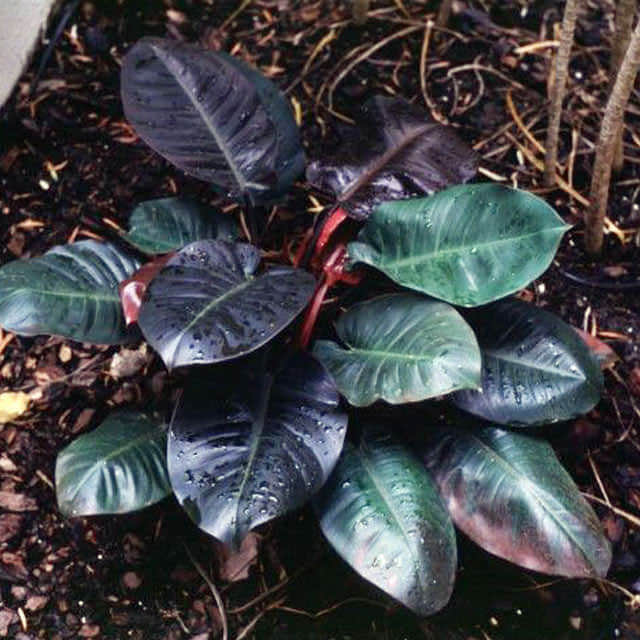
Why does your Philodendron sanguineum have leggy stems? Diagnose the cause and fix it with our step-by-step guide.
Philodendron sanguineum is a climber that seeks light; when light levels are low, the plant undergoes etiolation, stretching its internodes excessively to find a light source. This results in long, weak stems with sparse foliage.
As a hemi-epiphyte, this species naturally grows upward using moss poles or trees. Without a vertical structure to cling to, the stems may sprawl and lose their structural integrity, appearing 'leggy' as they search for stability.
A high-nitrogen fertilizer regimen can trigger rapid, succulent vegetative growth that lacks the necessary lignin strength for structural support. This leads to soft, elongated stems that cannot support their own weight.
While less common for 'legginess' than light issues, chronic overwatering can lead to weakened root systems. If roots cannot provide sufficient structural stability or nutrient transport, the plant may produce weak, spindly new growth.
Your plant might also be experiencing one of these issues:

 English
 Italiano