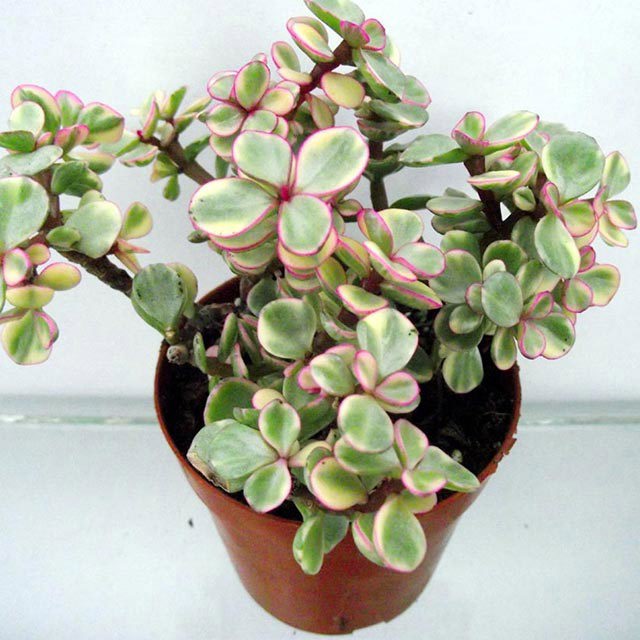
Portulacaria afra variegata Drooping Leaves
eco Drooping Leaves

Portulacaria afra variegata – Drooping Leaves

Why does your Portulacaria afra variegata have drooping leaves? Diagnose the cause and fix it with our step-by-step guide.

search Possible Causes

error

Overwatering and Root Rot

Excessive moisture in the substrate causes oxygen deprivation in the roots, leading to fungal pathogens like Phytophthora. As the root system decays, it can no longer support the hydraulic pressure needed to keep the fleshy leaves turgid.

Very Common
lightbulb
How to confirm: Gently tug on a stem; if it pulls away easily from the soil or feels mushy, root rot is likely present.
build How to fix it
shopping_cart Recommended Products
1 Immediately remove the plant from its current pot and trim away any mushy, black, or foul-smelling decayed roots using sterilized shears.
2 Repot the plant in a well-draining, gritty substrate mix and use a pot with excellent drainage to prevent future water pooling.
3 Monitor the soil moisture levels closely with a meter to ensure the substrate is allowed to dry out completely between waterings.
error

Underwatering and Desiccation

As a succulent, Portulacaria afra stores water in its leaves. When soil moisture is depleted for extended periods, the plant uses its internal reserves, causing the leaves to lose turgidity and droop.

Very Common
lightbulb
How to confirm: Check the soil depth at least 2 inches down; if it is bone dry and the leaves feel wrinkled or soft, the plant needs water.
build How to fix it
shopping_cart Recommended Products
1 Immediately check the soil moisture level using a moisture meter to confirm the depth of desiccation.
2 Thoroughly soak the soil with water until it drains from the bottom of the pot, ensuring the root ball is fully rehydrated.
3 Ensure the plant is in a well-draining container with a saucer to prevent water from sitting stagnant around the roots.
warning

Temperature Stress (Cold Shock)

This species is sensitive to temperatures below 50°F (10°C). Sudden drops in temperature can cause metabolic slowdown and cell wall instability, leading to immediate drooping.

Common
lightbulb
How to confirm: Check if the plant has been exposed to drafts from windows or recent nighttime temperature drops.
build How to fix it
shopping_cart Recommended Products
1 Immediately move the plant to a warm, draft-free indoor location where temperatures remain consistently above 50°F (10°C).
2 Check the soil moisture with a meter to ensure the cold shock hasn't led to overwatering, as cold, wet soil can cause root rot.
3 Avoid fertilizing the plant until it shows signs of new growth and has stabilized in the warmer environment.
warning

Pest Infestation (Mealybugs)

Mealybugs feed on the sap of the stems and leaves, draining the plant's nutrients and moisture. This loss of fluids directly impacts the plant's ability to maintain leaf structure.

Common
lightbulb
How to confirm: Inspect the junctions between the leaves and stems for small, white, cottony masses.
build How to fix it
shopping_cart Recommended Products
1 Inspect the crevices of stems and leaf axils for white, cottony clusters and treat the infestation immediately with an organic insecticide spray.
2 Gently wipe away visible pests with a cotton swab dipped in isopropyl alcohol to prevent further sap depletion.
3 Monitor soil moisture levels using a moisture meter to ensure the plant is not also suffering from overwatering, which can exacerbate drooping.

Other Portulacaria afra variegata problems

Your plant might also be experiencing one of these issues:

local_hospital All symptoms eco All plants with drooping leaves
favorite