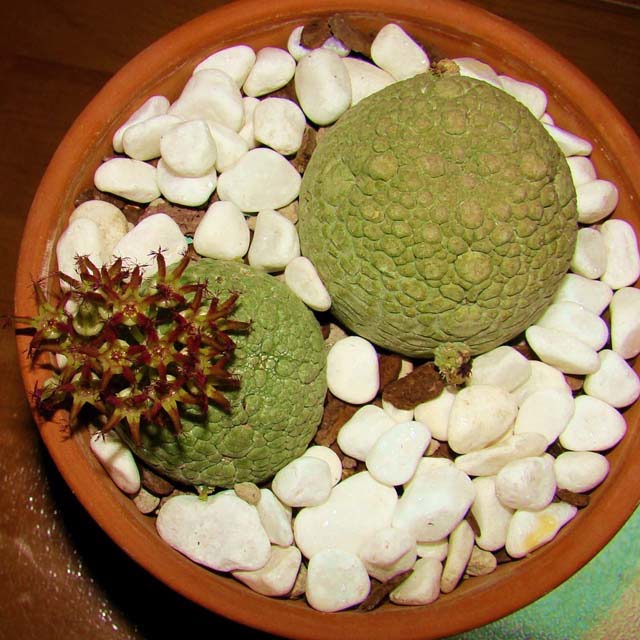
Pseudolithos migiurtinus White Cottony Spots
eco White Cottony Spots

Pseudolithos migiurtinus – White Cottony Spots

Why does your Pseudolithos migiurtinus have white cottony spots? Diagnose the cause and fix it with our step-by-step guide.

search Possible Causes

error

Mealybug Infestation

Mealybugs are small, soft-bodied insects that secrete a white, waxy, cottony substance to protect themselves. They attach to the crevices of Pseudolithos migiurtinus, sucking sap and potentially causing the plant to shrink or deform.

Very Common
lightbulb
How to confirm: Use a magnifying glass to look for tiny moving insects or small white clusters nestled in the plant's folds.
build How to fix it
shopping_cart Recommended Products
1 Isolate the plant immediately from other greenery and use a cotton swab dipped in isopropyl alcohol to manually remove the visible white cottony masses from the crevices.
2 Apply an organic insecticide spray to the entire plant, ensuring you coat the undersides of leaves and all crevices to eliminate remaining insects and larvae.
3 Monitor the soil moisture closely to ensure the plant is not overwatered, as high humidity can encourage mealybug resurgence.
warning

Cottony Scale

Similar to mealybugs, scale insects can produce white filaments that resemble cotton. These pests colonize the surface of the stone plant and excrete honeydew, which can lead to secondary fungal growth.

Common
lightbulb
How to confirm: Check if the white spots are stationary and if there is a sticky residue (honeydew) on the plant's skin.
build How to fix it
shopping_cart Recommended Products
1 Treat the plant with an organic insecticide/miticide spray to eliminate the scale insects and their white filaments.
2 Carefully wipe the white cottony spots off the plant surface using a cotton swab dipped in isopropyl alcohol to remove existing pests.
3 Monitor the soil moisture levels closely to ensure the plant is not overly damp, as excess moisture can encourage secondary fungal growth.
warning

Sclerotinia or Fungal Mycelium

In high humidity environments, certain fungal pathogens can produce white, thread-like mycelium on the surface of the plant tissue. This often occurs if the Pseudolithos is kept in poorly ventilated conditions with excess moisture.

Common
lightbulb
How to confirm: Observe if the white spots are accompanied by soft, decaying tissue or a musty smell near the base of the plant.
build How to fix it
shopping_cart Recommended Products
1 Apply an organic fungicide to the affected areas to eliminate the fungal mycelium and prevent the spread of Sclerotinia.
2 Improve air circulation around the plant and reduce humidity levels to create an environment less hospitable to fungal growth.
3 Monitor soil moisture levels closely to ensure the substrate is not staying too wet, which can trigger fungal pathogens.
local_hospital All symptoms eco All plants with white cottony spots
favorite


