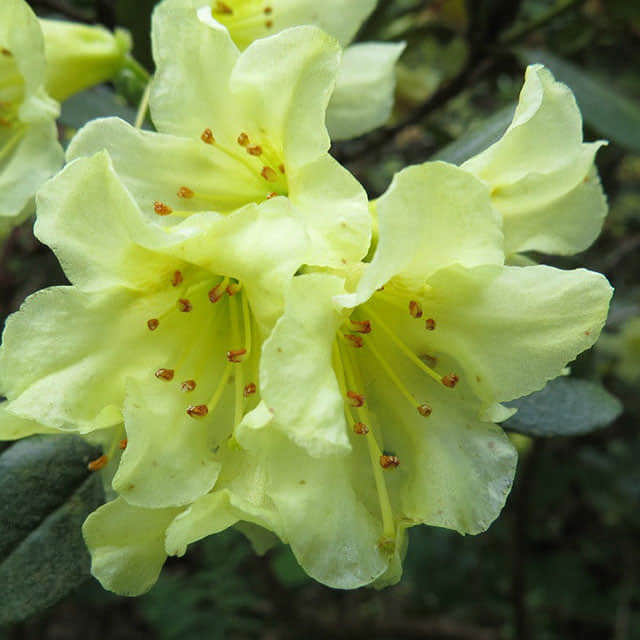
Why does your Rhododendron austrinum have fine webbing? Diagnose the cause and fix it with our step-by-step guide.
Spider mites are common pests for Golden Azaleas, especially in hot, dry conditions. They pierce the leaf cells to feed on sap, leaving behind fine silken webbing and characteristic stippling (tiny white dots) on the foliage.
Certain small, winged insects like psyllids can produce fine webbing or silk-like structures as they aggregate on new growth. This often coincides with the presence of honeydew and potential sooty mold on the azalea leaves.
In extremely humid environments, certain fungal growth patterns or molds can appear as a fine, web-like fuzz on the leaf surface. This is less common than mite webbing but can mimic the appearance of silk.
Your plant might also be experiencing one of these issues:

 English
 Italiano