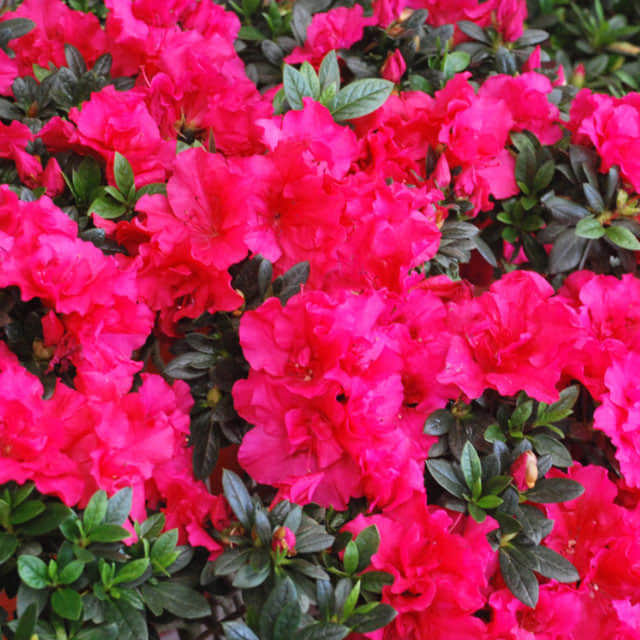
Rhododendron brachycarpum White Cottony Spots
eco White Cottony Spots

Rhododendron brachycarpum – White Cottony Spots

Why does your Rhododendron brachycarpum have white cottony spots? Diagnose the cause and fix it with our step-by-step guide.

search Possible Causes

error

Mealybugs

These sap-sucking insects produce a white, waxy, cottony secretion to protect themselves while feeding on the plant's vascular system. In Rhododendrons, they often congregate at the base of leaves or on new growth buds.

Very Common
lightbulb
How to confirm: Inspect the undersides of leaves and stem junctions for small, crawling white insects encased in fluff.
build How to fix it
shopping_cart Recommended Products
1 Isolate the plant immediately to prevent the mealybugs from spreading to your other houseplants.
2 Treat the infestation by spraying the plant with an organic insecticide or neem oil to kill the insects and remove the waxy coating.
3 Gently wipe away visible cottony clusters using a cotton swab dipped in isopropyl alcohol to disrupt the insect's protection.
error

Woolly Aphids

Similar to mealybugs, these aphids secrete a white filamentous wax that covers their bodies and the surrounding foliage. They can cause leaf curling and stunted growth in Rhododendron species by extracting nutrients.

Very Common
lightbulb
How to confirm: Check for clusters of white fuzz on tender new shoots and look for sticky honeydew residue on lower leaves.
build How to fix it
shopping_cart Recommended Products
1 Apply an organic insecticide spray to the affected foliage to eliminate the woolly aphids and their protective wax coating.
2 Prune and dispose of heavily infested or severely curled leaves to prevent the spread of aphids to healthy parts of the plant.
3 Monitor the plant regularly using a moisture meter to ensure the plant remains hydrated, as aphid feeding can stress the root system.
warning

Cottony Scale

Scale insects can develop a thick, white, cotton-like coating as they mature. This infestation disrupts the nutrient flow within the Short-calyx Rhododendron, often leading to chlorosis in nearby leaves.

Common
lightbulb
How to confirm: Gently scrape the white mass with a fingernail to see if a small, hard insect body is underneath.
build How to fix it
shopping_cart Recommended Products
1 Treat the infestation immediately with an organic insecticide/miticide spray to eliminate the scale insects and their protective coating.
2 Manually remove visible cottony clusters from stems and leaves using a soft cloth or cotton swab dipped in isopropyl alcohol.
3 Apply a balanced liquid fertilizer to help the plant recover from nutrient disruption and address any developing chlorosis.
warning

Fungal Mycelium (Botrytis)

Certain fungal pathogens can produce visible white, fuzzy mycelium on decaying plant tissue. While usually associated with damping-off, in high humidity, it can appear as white patches on older Rhododendron foliage.

Common
lightbulb
How to confirm: Examine if the white spots are accompanied by soft, rotting, or browning leaf tissue.
build How to fix it
shopping_cart Recommended Products
1 Prune and remove all infected foliage and decaying plant tissue immediately to prevent the fungal spores from spreading to healthy parts of the Rhododendron.
2 Apply an organic fungicide to the affected areas to control the spread of Botrytis and protect new growth.
3 Improve air circulation around the plant and reduce humidity by avoiding overhead watering, which helps prevent fungal mycelium from developing.

Other Rhododendron brachycarpum problems

Your plant might also be experiencing one of these issues:

local_hospital All symptoms eco All plants with white cottony spots
favorite


