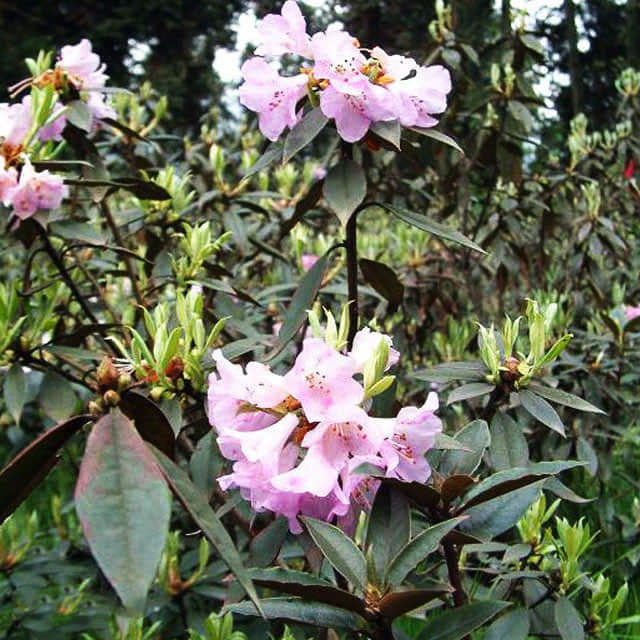
Rhododendron rubiginosum Fine Webbing
eco Fine Webbing

Rhododendron rubiginosum – Fine Webbing

Why does your Rhododendron rubiginosum have fine webbing? Diagnose the cause and fix it with our step-by-step guide.

search Possible Causes

error

Spider Mites (Tetranychidae)

The fine webbing is a classic hallmark of spider mite infestations, which thrive in the warm, dry conditions often experienced by Rhododendron rubiginosum. These arachnids pierce leaf cells to suck out chlorophyll, leading to stippling and eventual leaf drop.

Very Common
lightbulb
How to confirm: Hold a white piece of paper underneath a leaf and tap the leaf sharply to see if tiny crawling specks fall onto the paper.
build How to fix it
shopping_cart Recommended Products
1 Immediately spray the plant with an organic miticide or insecticide to eliminate existing spider mite populations and eggs.
2 Increase humidity around the plant and ensure the soil remains consistently moist, as spider mites thrive in dry environments.
3 Prune and dispose of heavily infested or dead leaves to prevent the mites from spreading to healthy parts of the plant.
warning

Spotted Sulfur Mites

These mites create much finer, almost invisible webbing compared to spider mites and are often found on the undersides of Rhododendron foliage. They can cause leaves to discolor and appear dusty or silken.

Common
lightbulb
How to confirm: Inspect the underside of the leaves closely with a magnifying glass for tiny, yellowish-moving dots.
build How to fix it
shopping_cart Recommended Products
1 Apply an organic miticide or insecticide spray to the undersides of the leaves to eliminate the sulfur mites and their eggs.
2 Prune and dispose of heavily infested foliage to prevent the mites from spreading to healthy parts of the plant.
3 Increase humidity around the plant, as mites thrive in dry environments; consider using a fine mist spray.
warning

High Humidity/Condensation Trap

In extremely humid environments with poor airflow, fine fungal hyphae or bacterial films can sometimes mimic a web-like appearance on the leaf surface. This is less common as true 'webbing' but can present as a delicate mesh texture.

Common
lightbulb
How to confirm: Check if the webbing disappears when the humidity levels are lowered and air circulation is increased around the shrub.
build How to fix it
shopping_cart Recommended Products
1 Improve air circulation around the plant by using a small fan or spacing it away from other dense foliage to prevent moisture from trapping on the leaf surface.
2 Apply an organic fungicide to treat any potential fungal hyphae or bacterial films that have developed due to the high humidity.
3 Monitor the soil moisture levels closely to ensure the substrate is not staying too saturated, which can contribute to high localized humidity.

Other Rhododendron rubiginosum problems

Your plant might also be experiencing one of these issues:

local_hospital All symptoms eco All plants with fine webbing
favorite