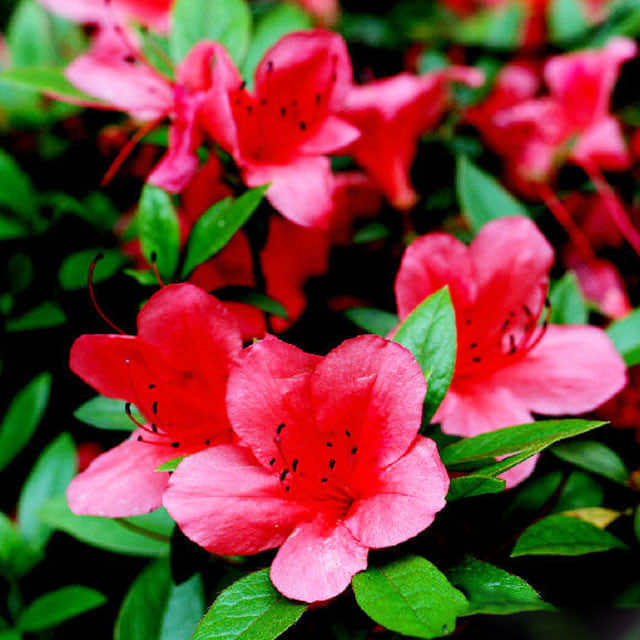
Rhododendron satsuki Fine Webbing
eco Fine Webbing

Rhododendron satsuki – Fine Webbing

Why does your Rhododendron satsuki have fine webbing? Diagnose the cause and fix it with our step-by-step guide.

search Possible Causes

error

Two-Spotted Spider Mite Infestation

Spider mites thrive in the warm, dry conditions that Satsuki Azaleas often experience during summer. They pierce the leaf cells to suck out contents, leaving behind fine silken webs and stippled white spots on the foliage.

Very Common
lightbulb
How to confirm: Hold a white piece of paper underneath a leaf and tap it sharply to see if tiny moving specks fall off.
build How to fix it
shopping_cart Recommended Products
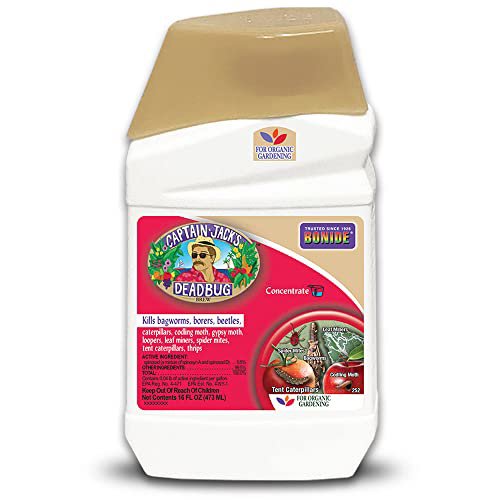
1 Apply an organic miticide or insecticide spray to the foliage to eliminate the spider mite population and destroy eggs.
2 Increase humidity around the plant and avoid letting the soil dry out completely, as spider mites thrive in hot, arid environments.
3 Prune and dispose of heavily infested or dead leaves to prevent the mites from spreading to healthy parts of the plant.
warning

Broad Mites

Unlike spider mites, broad mites are microscopic and primarily attack the new growth of Azaleas. While they don't produce large webs, their feeding can cause distorted, stunted leaves that may appear covered in a fine, dusty residue or silk.

Common
lightbulb
How to confirm: Inspect the very tips of new growth for puckering, curling, or thickened leaf margins.
build How to fix it
shopping_cart Recommended Products
1 Apply an organic insecticide/miticide spray to the new growth to eliminate the microscopic broad mites.
2 Prune and dispose of any heavily distorted or stunted new growth to reduce the mite population and prevent further spread.
3 Monitor the plant's new leaves closely for any signs of returning silk or leaf distortion.
warning

Fall Webworm

In certain climates, Fall Webworms can create dense, silken webs that envelop entire branches of Rhododendron species. These webs protect the larvae as they consume the leaf tissue, leaving behind skeletal remains.

Common
lightbulb
How to confirm: Check if the webbing is much larger and more structural than fine individual strands, covering multiple leaves at once.
build How to fix it
shopping_cart Recommended Products
1 Manually remove the silken webs and any visible larvae from the branches to prevent further defoliation.
2 Apply an organic insecticide spray to the affected areas to eliminate any remaining larvae and prevent a new infestation.
3 Monitor the plant closely for new webbing and treat promptly with a biological control if the caterpillars reappear.

Other Rhododendron satsuki problems

Your plant might also be experiencing one of these issues:

local_hospital All symptoms eco All plants with fine webbing
favorite