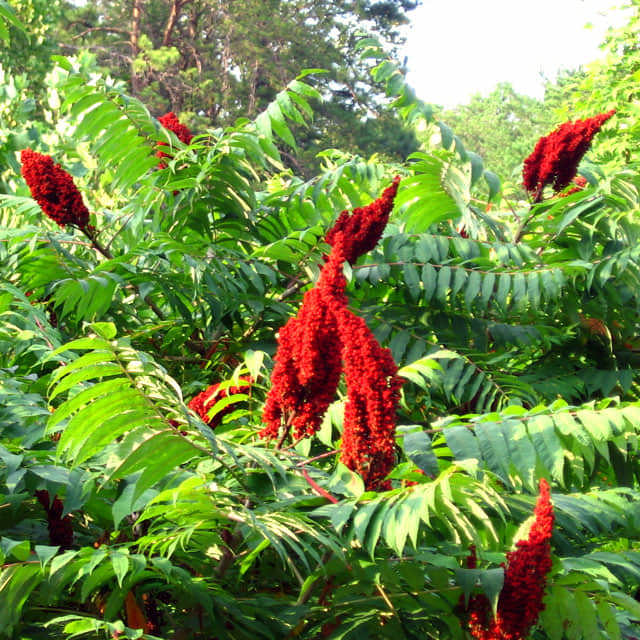
Rhus glabra Yellow Leaves
eco Yellow Leaves

Rhus glabra – Yellow Leaves

Why does your Rhus glabra have yellow leaves? Diagnose the cause and fix it with our step-by-step guide.

pets Pet Friendly

search Possible Causes

error

Nitrogen Deficiency

Nitrogen is a mobile nutrient in Smooth Sumac; when lacking, the plant translocates nitrogen from older leaves to new growth, causing uniform yellowing of older foliage first.

Very Common
lightbulb
How to confirm: Observe if the yellowing starts on the oldest, bottom-most leaves while newer leaves remain green.
build How to fix it
shopping_cart Recommended Products
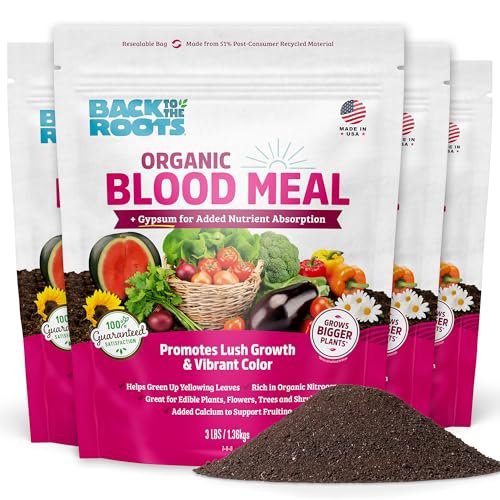
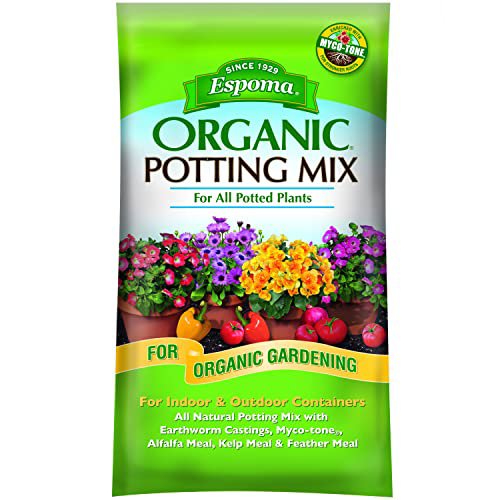
1 Apply a nitrogen-rich organic fertilizer to the soil to replenish the mobile nutrient levels.
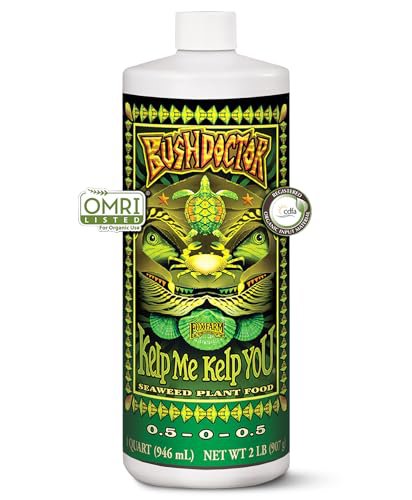
2 Supplement with a liquid seaweed fertilizer to boost overall nutrient uptake and plant vigor.
3 Monitor soil moisture levels with a meter to ensure nitrogen is being effectively transported to the roots.
error

Excessive Soil Moisture (Waterlogging)

While Rhus glabra is drought-tolerant once established, prolonged saturated soil leads to root hypoxia, which impairs nutrient uptake and triggers chlorosis.

Very Common
lightbulb
How to confirm: Check the soil moisture 2 inches below the surface to see if it remains saturated for long periods.
build How to fix it
shopping_cart Recommended Products
1 Immediately improve soil drainage by aerating the root zone or repotting into a more porous medium containing perlite to prevent further root rot.
2 Monitor the soil moisture levels closely using an analog meter to ensure the soil is allowed to dry out significantly between watering sessions.
3 Reduce watering frequency and ensure the plant is in a container with adequate drainage holes to prevent water from pooling at the base.
warning

Iron Chlorosis (High Soil pH)

In alkaline soils, iron becomes chemically unavailable to the sumac, leading to interveinal chlorosis where leaf veins stay green but the tissue turns yellow.

Common
lightbulb
How to confirm: Inspect if the yellowing is specifically concentrated between the leaf veins, particularly on newer growth.
build How to fix it
shopping_cart Recommended Products
1 Apply an acidifying soil amendment to lower the soil pH and make iron more bioavailable to the roots.
2 Monitor soil acidity levels regularly using a pH tester to ensure the environment remains in the ideal acidic range for Rhus glabra.
3 Supplement with a chelated iron or acid-loving fertilizer to provide immediate nutrient availability.
warning

Root Injury or Physical Disturbance

Mechanical damage to the root system during planting or heavy construction can disrupt the vascular flow of nutrients, causing symptomatic leaf yellowing.

Common
lightbulb
How to confirm: Examine the base of the plant and surrounding soil for signs of recent digging, compaction, or structural damage.
build How to fix it
shopping_cart Recommended Products
1 Inspect the root zone for any exposed or broken roots and gently cover them with fresh, nutrient-rich soil to protect them from air exposure.
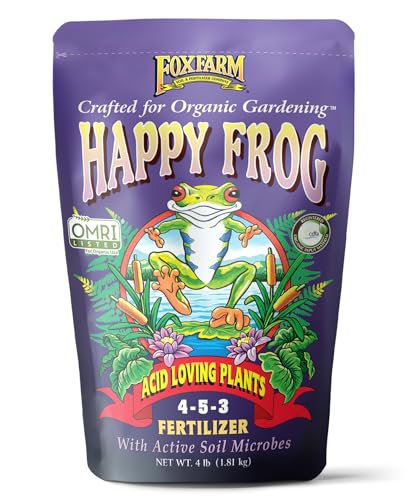
2 Apply a microbial-based liquid fertilizer to help stimulate root zone development and aid in the recovery of the damaged vascular system.
3 Monitor soil moisture levels closely with a moisture meter to ensure the plant is not being overwatered while its roots are in a compromised state.
local_hospital All symptoms eco All plants with yellow leaves
favorite