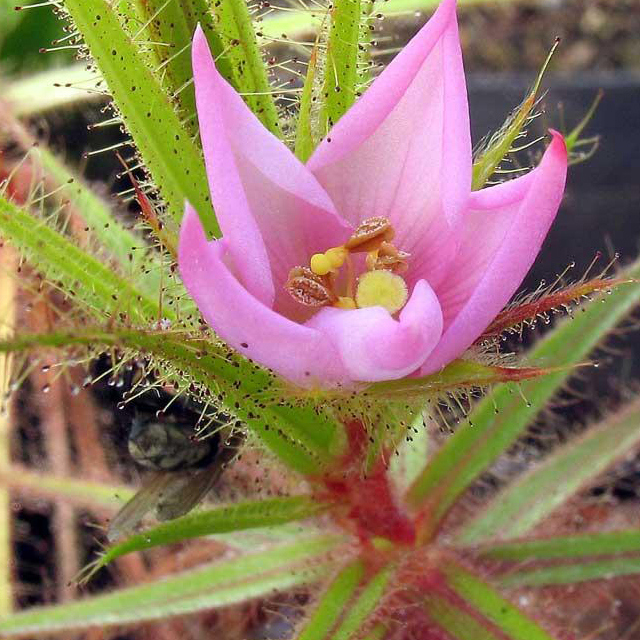
Why does your Roridula gorgonias have white cottony spots? Diagnose the cause and fix it with our step-by-step guide.
These sap-sucking insects produce white, waxy, cottony secretions to protect themselves. On Roridula gorgonias, they often cluster near the base of the leaves or where the mucilage glands are located, draining the plant's energy.
This fungal pathogen manifests as white, flour-like patches on the surface of the foliage. In Roridula, high humidity combined with poor air circulation can trigger outbreaks that inhibit photosynthesis.
Certain species of scale produce a white, cottony mass around their bodies. They attach to the stems and leaves of Roridula, secreting honeydew that can lead to secondary fungal growth like sooty mold.
Your plant might also be experiencing one of these issues:

 English
 Italiano

