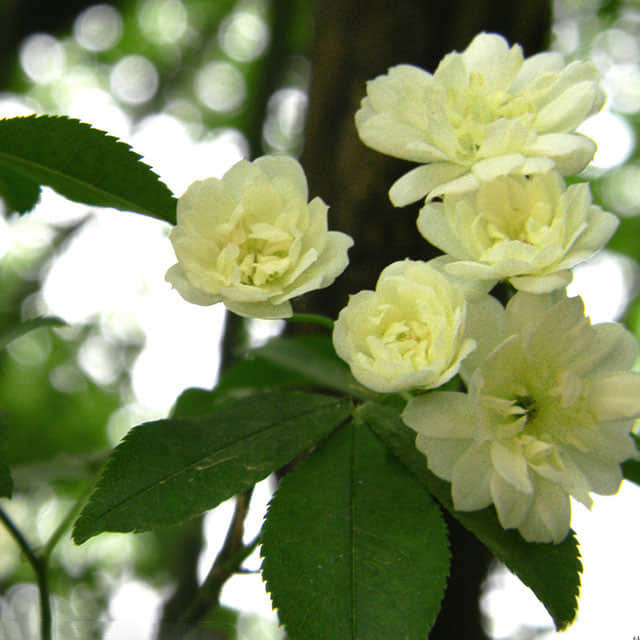
Why does your Rosa banksiae have white powder? Diagnose the cause and fix it with our step-by-step guide.
This is the most common fungal disease for Rosa banksiae, especially in humid conditions with poor air circulation. The fungus colonizes the surface of leaves and buds, creating a characteristic white, flour-like coating.
These small, soft-bodied insects secrete a white, waxy substance that can appear as powdery spots on the stems and leaf axils of climbing roses. Unlike fungus, these are living pests that congregate in crevices.
Certain species of scale produce white, cottony masses on the canes and leaves of Lady Banks' Rose. This can lead to stunted growth and the production of honeydew, which attracts sooty mold.
Your plant might also be experiencing one of these issues:

 English
 Italiano

