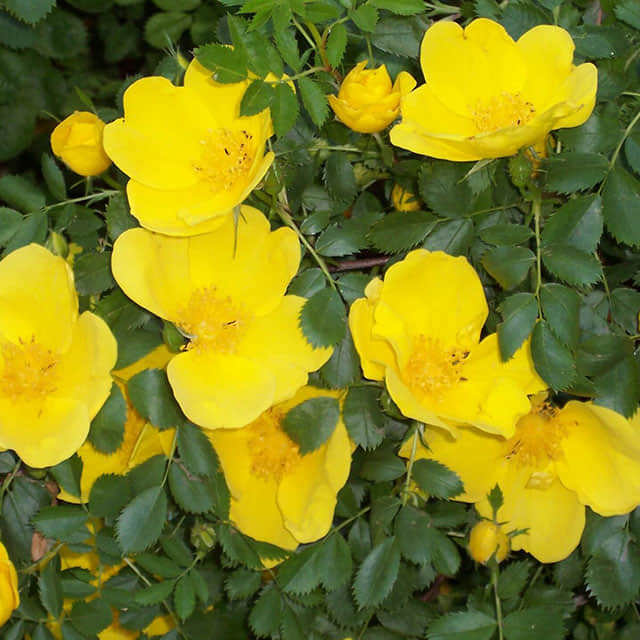
Rosa foetida Yellow Leaves
eco Yellow Leaves

Rosa foetida – Yellow Leaves

Why does your Rosa foetida have yellow leaves? Diagnose the cause and fix it with our step-by-step guide.

search Possible Causes

error

Black Spot (Diplocarpon rosae)

This fungal pathogen is highly prevalent in Rosa foetida. As the fungus spreads, it causes chlorosis (yellowing) of the leaves, followed by dark spots and premature leaf drop.

Very Common
lightbulb
How to confirm: Inspect the underside of yellow leaves for small, circular black lesions with fringed edges.
build How to fix it
shopping_cart Recommended Products
1 Remove and dispose of all infected, yellowing leaves and fallen debris from the base of the plant to prevent fungal spores from spreading.
2 Apply an organic fungicide to the foliage to control the spread of the black spot pathogen.
3 Improve air circulation around the rose bush by pruning crowded branches and avoid overhead watering to keep leaves dry.
error

Iron Chlorosis (Nutrient Deficiency)

In alkaline soils, Rosa foetida cannot effectively absorb iron. This results in interveinal chlorosis, where leaves turn bright yellow while the veins remain dark green.

Very Common
lightbulb
How to confirm: Check if the yellowing is strictly limited to the area between the veins on newer growth.
build How to fix it
shopping_cart Recommended Products
1 Apply a chelated iron supplement or a specialized fertilizer to increase iron availability in the soil.
2 Monitor soil pH levels to ensure the environment remains acidic enough for iron uptake, ideally between 6.0 and 6.5.
3 Amend the existing soil with organic matter or sulfur to help lower the pH and prevent future nutrient lockout.
warning

Overwatering and Root Suffocation

Excessive moisture in the soil prevents oxygen from reaching the roots of the Austrian Brier, leading to systemic yellowing and wilting of foliage.

Common
lightbulb
How to confirm: Stick your finger two inches into the soil; if it feels soggy or muddy, the plant is likely overwatered.
build How to fix it
shopping_cart Recommended Products
1 Immediately reduce watering frequency and allow the top inch of soil to dry out completely before watering again to prevent further root suffocation.
2 Repot the rose in a well-draining medium and consider adding perlite to improve aeration and prevent future waterlogging.
3 Ensure the plant is in a container with adequate drainage and use a saucer to catch excess water, but do not let the pot sit in standing water.
warning

Downy Mildew (Peronospora sparsii)

While less common than Black Spot, this pathogen causes rapid yellowing of leaves and can lead to significant defoliation in humid conditions.

Common
lightbulb
How to confirm: Look for a fuzzy, grayish-purple fungal growth on the undersides of the yellowed leaves.
build How to fix it
shopping_cart Recommended Products
1 Apply an organic fungicide to control the spread of the downy mildew pathogen and protect healthy foliage.
2 Prune and dispose of heavily infected or yellowing leaves to reduce the pathogen load in the plant canopy.
3 Improve air circulation around the rose bush and avoid overhead watering to prevent the humid conditions that favor mildew growth.

Other Rosa foetida problems

Your plant might also be experiencing one of these issues:

local_hospital All symptoms eco All plants with yellow leaves
favorite