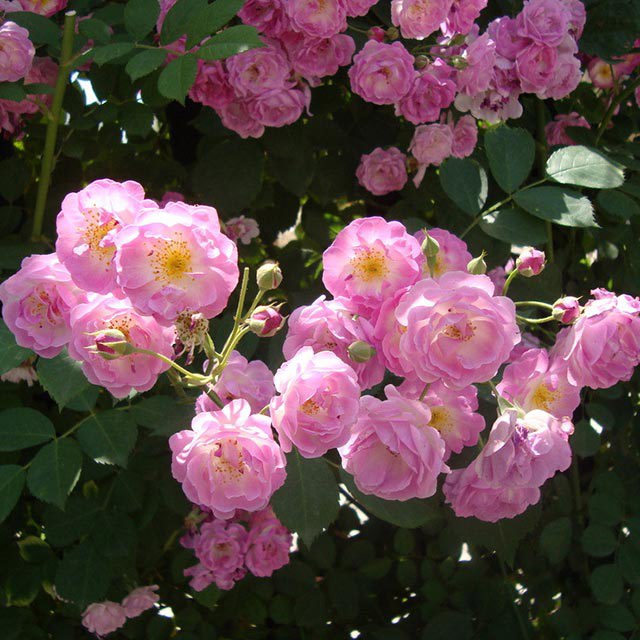
Why does your Rosa multiflora have brown leaf tips? Diagnose the cause and fix it with our step-by-step guide.
In Rosa multiflora, insufficient soil moisture causes the plant to prioritize hydration for its core structure, leading to the death of leaf extremities. This often manifests as crispy, brown edges that progress inward from the tips.
Excessive application of nitrogen-rich fertilizers can lead to high salt concentrations in the soil, which draws water out of the rose's leaf cells via osmosis. This results in characteristic brown, scorched-looking tips.
When Rosa multiflora absorbs more water than it can transpire, cells in the leaf margins rupture. As these cells die and dry out, they turn brown and may feel slightly blistered or corky.
While black spot typically presents as dark lesions, early stages or secondary infections can cause necrotic brown edges on the foliage. This is common in humid environments where airflow around the rose bush is poor.
Your plant might also be experiencing one of these issues:

 English
 Italiano