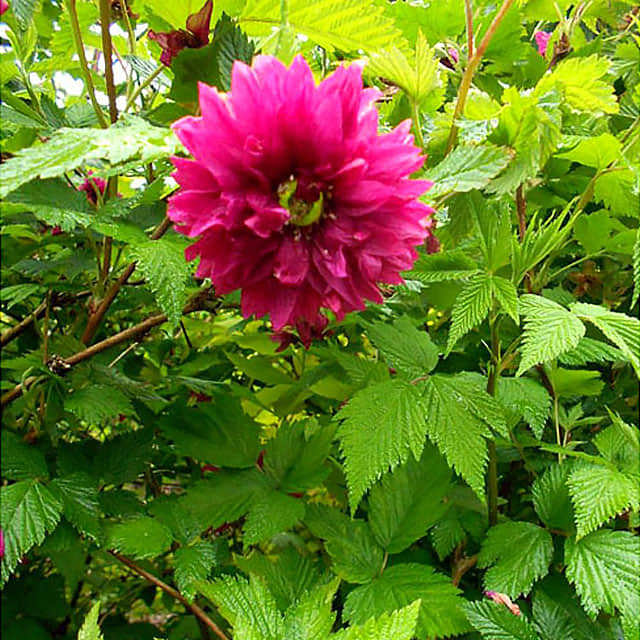
Rubus spectabilis Fine Webbing
eco Fine Webbing

Rubus spectabilis – Fine Webbing

Why does your Rubus spectabilis have fine webbing? Diagnose the cause and fix it with our step-by-step guide.

search Possible Causes

error

Two-Spotted Spider Mite (Tetranychus urticae)

These microscopic arachnids thrive in warm, dry conditions and feed on the underside of Salmonberry leaves, injecting saliva that damages cells. The fine webbing is a defensive structure created by the mites to protect their colonies and eggs.

Very Common
lightbulb
How to confirm: Hold a white piece of paper under a leaf and tap it sharply to see if tiny crawling specks fall onto the paper.
build How to fix it
shopping_cart Recommended Products
1 Apply an organic miticide or insecticide spray to the plant, ensuring you thoroughly coat the undersides of the leaves where the mites reside.
2 Increase local humidity and reduce dry heat around the plant to make the environment less hospitable for spider mite reproduction.
3 Prune and dispose of heavily infested or dead foliage to remove mite colonies and prevent further spread to healthy stems.
warning

Spider Mites (Tenuipalpus species)

While less destructive than the Two-Spotted variety, eriophyid mites can cause localized stippling and very fine silk threads on the leaf surface. This often occurs during periods of environmental stress or drought in Salmonberry thickets.

Common
lightbulb
How to confirm: Examine the leaf margins for extremely fine, almost invisible silken threads that do not move when disturbed.
build How to fix it
shopping_cart Recommended Products
1 Apply an organic miticide or insecticide to the plant to eliminate the mite population and destroy any remaining eggs.
2 Increase local humidity and ensure consistent soil moisture to reduce the environmental stress that triggers mite outbreaks.
3 Prune and dispose of heavily infested leaves to prevent the mites from spreading to healthy parts of the Salmonberry thicket.
warning

Small Scale Insects (Covert infestation)

Certain scale species can produce 'honeydew' which, when dried or combined with environmental dust, may appear as a messy, web-like residue. This is often accompanied by the presence of Sooty Mold on the leaf surface.

Common
lightbulb
How to confirm: Check for small, stationary bumps on the stems or undersides of leaves that can be scraped off with a fingernail.
build How to fix it
shopping_cart Recommended Products
1 Thoroughly inspect the undersides of leaves and stems for small, immobile bumps or a sticky residue to confirm the presence of scale insects.
2 Apply an organic insecticide spray to eliminate the scale insects and control any associated fungal growth or pests.
3 Wipe the leaves with a damp cloth to remove the 'honeydew' residue and any secondary sooty mold buildup.
local_hospital All symptoms eco All plants with fine webbing
favorite