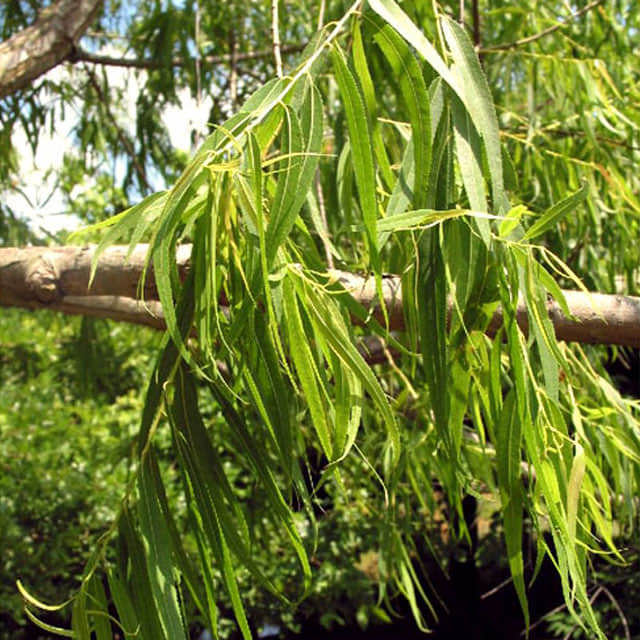
Why does your Salix nigra have drooping leaves? Diagnose the cause and fix it with our step-by-step guide.
Pet FriendlyDespite being a riparian species, extreme drought can lead to hydraulic failure in Black Willow leaves. The tree closes stomata to prevent moisture loss, resulting in visible wilting and drooping of the long, slender leaves.
In poorly drained or excessively compacted soils, Salix nigra is highly susceptible to fungal pathogens that cause root decay. This prevents the roots from transporting water to the canopy, mimicking drought symptoms through drooping.
Larvae of certain moth species tunnel through the leaf tissue of Black Willow, disrupting the vascular flow within the blade. Severe infestations can cause the leaflets to lose turgidity and droop.
Rapid increases in temperature or high afternoon sun exposure can cause transpiration rates to exceed the tree's uptake capacity. This causes the thin, delicate leaves of the Black Willow to wilt and droop during the hottest part of the day.

 English
 Italiano