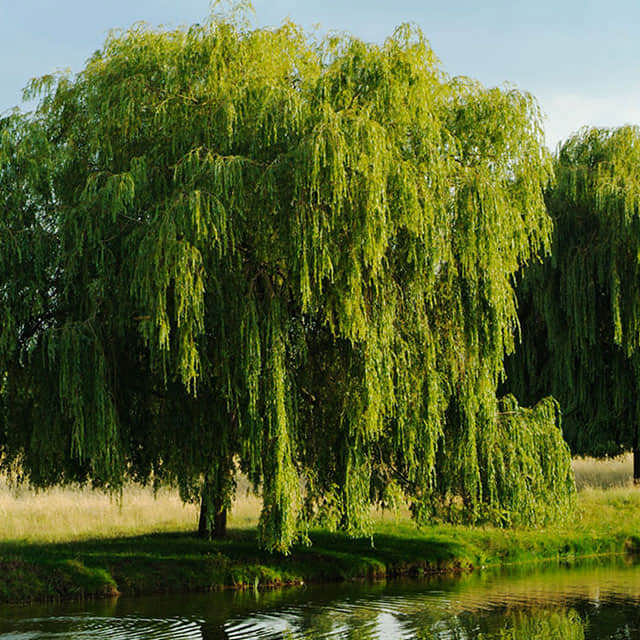
Why does your Salix have yellow leaves? Diagnose the cause and fix it with our step-by-step guide.
While Willows are water-loving, prolonged saturation in poorly draining soil can starve roots of oxygen. This leads to chlorosis (yellowing) as the root system fails to transport nutrients effectively.
A lack of nitrogen prevents the synthesis of chlorophyll, causing older leaves to turn pale yellow before progressing up the branch. This is common in Willows planted in nutrient-depleted or highly sandy soils.
In extreme heat or during prolonged dry spells, Willows may lose leaf turgor and turn yellow as a defense mechanism to reduce transpiration. This is particularly common in young Salix specimens with shallow root systems.
This water mold attacks the root system of Salix species in damp environments, causing widespread yellowing and eventual leaf drop. It often manifests as a sudden decline in vigor during the growing season.

 English
 Italiano