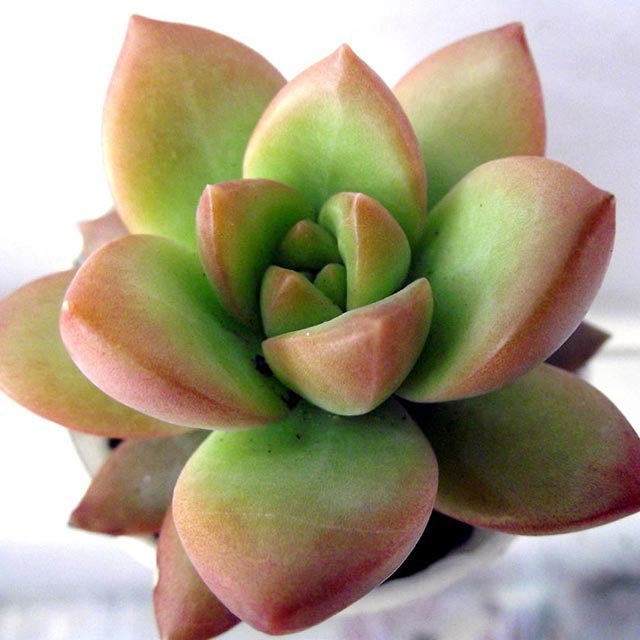
Why does your Sedum adolphii have fine webbing? Diagnose the cause and fix it with our step-by-step guide.
Spider mites thrive in the dry, warm conditions often favored by Sedum adolphii. They pierce the succulent leaves to suck out chlorophyll, leaving behind characteristic fine silk webbing and stippling.
In high humidity or stagnant air environments, spider mite populations can explode on Sedum species. The webbing becomes denser as the colony matures, eventually covering entire leaf clusters.
While not a biological pathogen, thick layers of dust on the waxy cuticle of Sedum adolphii can sometimes mimic a webbed appearance under certain lighting.
Your plant might also be experiencing one of these issues:

 English
 Italiano

