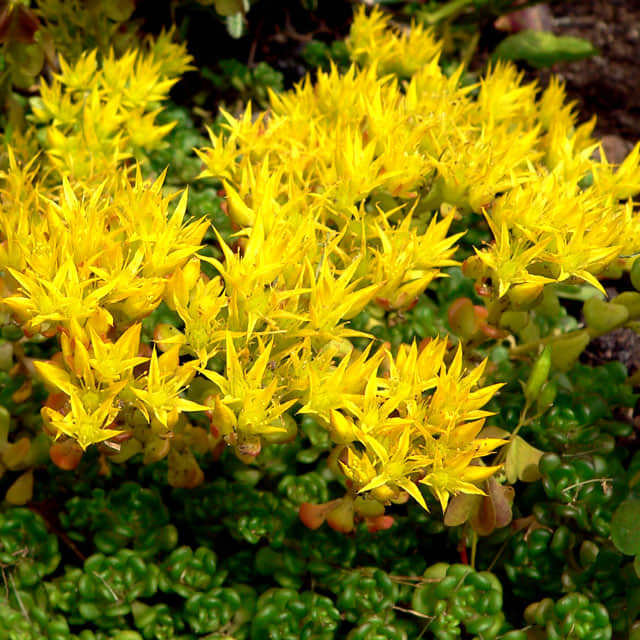
Sedum dasyphyllum Oreganum Yellow Leaves
eco Yellow Leaves

Sedum dasyphyllum Oreganum – Yellow Leaves

Why does your Sedum dasyphyllum Oreganum have yellow leaves? Diagnose the cause and fix it with our step-by-step guide.

search Possible Causes

error

Overwatering and Root Rot

As a succulent, Sedum dasyphyllum is highly susceptible to moisture retention. Excess water causes the roots to suffocate and decay, leading to systemic yellowing of the fleshy leaves.

Very Common
lightbulb
How to confirm: Gently squeeze a leaf; if it feels mushy or comes away from the stem too easily, root rot is likely.
build How to fix it
shopping_cart Recommended Products
1 Immediately remove the plant from its current container and trim away any mushy, black, or decayed roots to prevent further rot spread.
2 Repot the Sedum in a highly well-draining substrate, such as a mix containing perlite or pumice, to ensure moisture does not linger around the roots.
3 Use a moisture meter to monitor the soil, ensuring you only water when the medium is completely dry to avoid repeating the overwatering cycle.
warning

Nutrient Deficiency (Nitrogen)

A lack of nitrogen in well-draining substrate can cause older leaves to lose their chlorophyll and turn yellow. This often happens if the plant has been grown in depleted, sterile potting mixes for too long.

Common
lightbulb
How to confirm: Observe if the yellowing starts on the oldest, bottom leaves while the newer growth remains green.
build How to fix it
shopping_cart Recommended Products
1 Apply a nitrogen-rich organic fertilizer to replenish the soil nutrients and restore chlorophyll production.
2 Amend your existing substrate with organic worm castings to provide a slow-release source of nitrogen and beneficial microbes.
3 Ensure the plant is in a well-draining medium; consider mixing in perlite to prevent water retention that can exacerbate yellowing.
warning

Insufficient Light Exposure

Sedum dasyphyllum requires bright, direct light to maintain its compact form and vibrant color. In low-light conditions, the plant may undergo chlorosis as it fails to photosynthesize efficiently.

Common
lightbulb
How to confirm: Check if the plant is also exhibiting 'etiolation,' characterized by stretched, spindly stems and wider spacing between leaves.
build How to fix it
shopping_cart Recommended Products
1 Relocate your Sedum to a location that receives bright, direct sunlight for at least 6 hours a day to restore photosynthesis and color.
2 If natural light is insufficient, supplement with a full-spectrum grow light to provide the necessary intensity for a compact growth habit.
3 Monitor the soil moisture closely, as insufficient light often leads to slower water evaporation and potential root rot.
warning

Temperature Stress (Frost Damage)

While relatively hardy, extreme sudden drops in temperature or late spring frosts can damage the cell walls of the succulent leaves, resulting in yellow or translucent patches.

Common
lightbulb
How to confirm: Check for any recent exposure to freezing temperatures or frost warnings in your local area.
build How to fix it
shopping_cart Recommended Products
1 Move the plant to a sheltered, warmer location or bring it indoors to protect it from further temperature fluctuations and frost.
2 Monitor soil moisture closely using a moisture meter to ensure the plant is not being overwatered while in a stressed state.
3 Prune away any mushy or severely damaged leaves to prevent potential rot from spreading to healthy tissue.

Other Sedum dasyphyllum Oreganum problems

Your plant might also be experiencing one of these issues:

local_hospital All symptoms eco All plants with yellow leaves
favorite