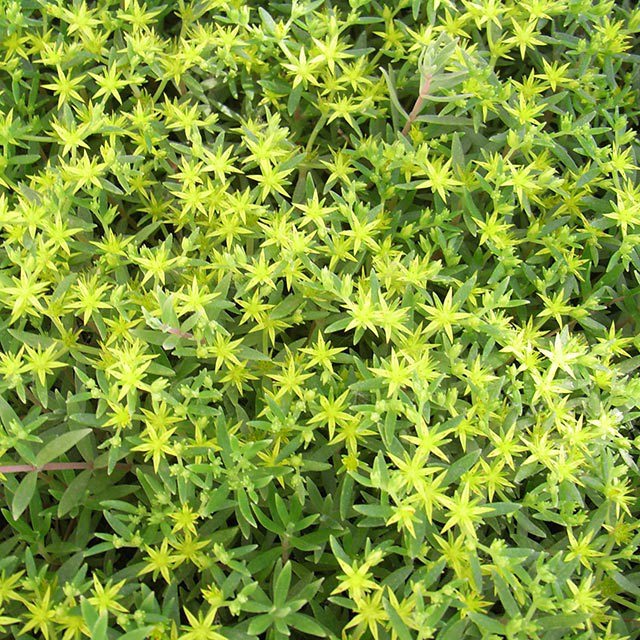
Sedum lineare Yellow Leaves
eco Yellow Leaves

Sedum lineare – Yellow Leaves

Why does your Sedum lineare have yellow leaves? Diagnose the cause and fix it with our step-by-step guide.

pets Pet Friendly

search Possible Causes

error

Overwatering and Root Rot

As a succulent, Sedum lineare is highly susceptible to fungal pathogens like Phytophthora if the substrate remains saturated. Excess moisture prevents oxygen from reaching the roots, causing them to decay and leading to systemic yellowing of the fleshy stems.

Very Common
lightbulb
How to confirm: Check the base of the stems; if they feel soft or mushy rather than firm, it is likely root rot.
build How to fix it
shopping_cart Recommended Products
1 Immediately remove the plant from the saturated soil and trim away any mushy, blackened, or decayed roots using sterilized shears.
2 Repot the Sedum in a well-draining, gritty substrate specifically designed for succulents to ensure rapid drying and oxygen access to the roots.
3 Use a moisture meter to monitor the substrate, ensuring you only water when the soil is completely dry to prevent future root rot.
warning

Nutrient Deficiency (Nitrogen)

A lack of available nitrogen prevents the plant from producing chlorophyll, which is essential for its green pigment. In Sedum species, this typically manifests as a uniform yellowing starting with the older, lower leaves.

Common
lightbulb
How to confirm: Observe if the yellowing pattern started at the bottom of the plant and move upward.
build How to fix it
shopping_cart Recommended Products
1 Apply a nitrogen-rich liquid fertilizer to boost chlorophyll production and restore green pigment to the foliage.
2 Monitor the soil moisture levels using a moisture meter to ensure nitrogen uptake is not being hindered by overwatering.
3 Prune away the most severely yellowed lower leaves to prevent potential fungal issues and redirect energy to new growth.
warning

Environmental Stress (Temperature Fluctuations)

Sudden exposure to extreme heat or unseasonable frost can shock the metabolic processes of the Linear Stonecrop. This stress disrupts photosynthesis, causing the chlorophyll to degrade and leaves to turn yellow or pale.

Common
lightbulb
How to confirm: Review recent weather changes or whether the plant was recently moved to a new location with different light levels.
build How to fix it
shopping_cart Recommended Products
1 Stabilize the plant's environment by moving it to a location with consistent temperatures, away from cold drafts or extreme heat sources.
2 Apply a microbial-based fertilizer to help the plant recover from metabolic shock and strengthen the root zone.
3 Monitor soil moisture levels closely during temperature shifts to ensure the plant is neither drowning nor desiccating.
warning

Pest Infestation (Aphids or Spider Mites)

Sucking insects feed on the sap of Sedum lineare, removing vital nutrients and injecting toxins. This localized damage causes chlorotic (yellow) spots on the leaves that eventually spread across the stem.

Common
lightbulb
How to confirm: Inspect the undersides of the leaves and the junctions of the stems for tiny moving dots or fine webbing.
build How to fix it
shopping_cart Recommended Products
1 Inspect the undersides of leaves and stems for tiny moving insects or fine webbing to confirm the presence of aphids or spider mites.
2 Apply an organic insecticide spray to the entire plant, ensuring thorough coverage of all foliage to eliminate pests and prevent further sap depletion.
3 Prune away any heavily yellowed or severely damaged stems to prevent the spread of toxins and encourage new, healthy growth.

Other Sedum lineare problems

Your plant might also be experiencing one of these issues:

local_hospital All symptoms eco All plants with yellow leaves
favorite