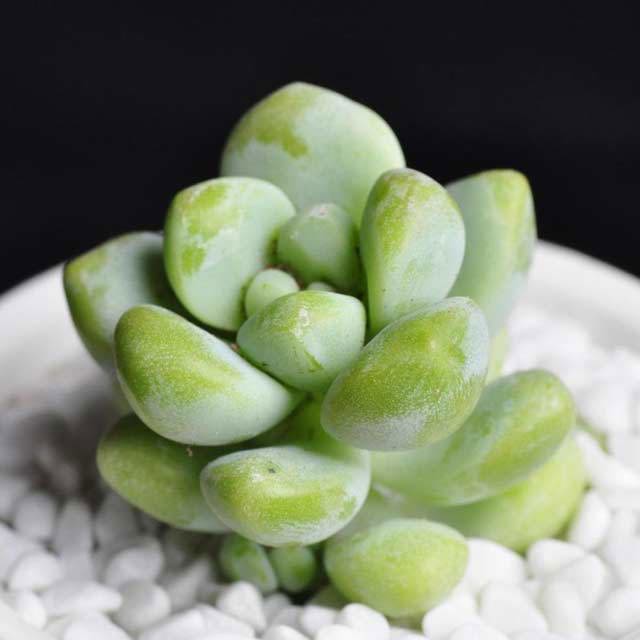
Why does your Sedum treleasei have fine webbing? Diagnose the cause and fix it with our step-by-step guide.
Spider mites thrive in the warm, dry conditions often experienced by Sedum treleasei. They pierce the succulent cells to feed, leaving behind fine silk webs and causing the leaves to appear stippled or faded.
Low humidity levels in indoor environments can trigger rapid reproduction of spider mites on this species. The webbing is a protective structure they build to create a microclimate for their eggs.
While less known for webbing, heavy thrips populations can sometimes create a silken appearance due to frass and disturbed leaf surfaces in succulents. They cause silvering or scarring on the Sedum foliage.
Your plant might also be experiencing one of these issues:

 English
 Italiano


