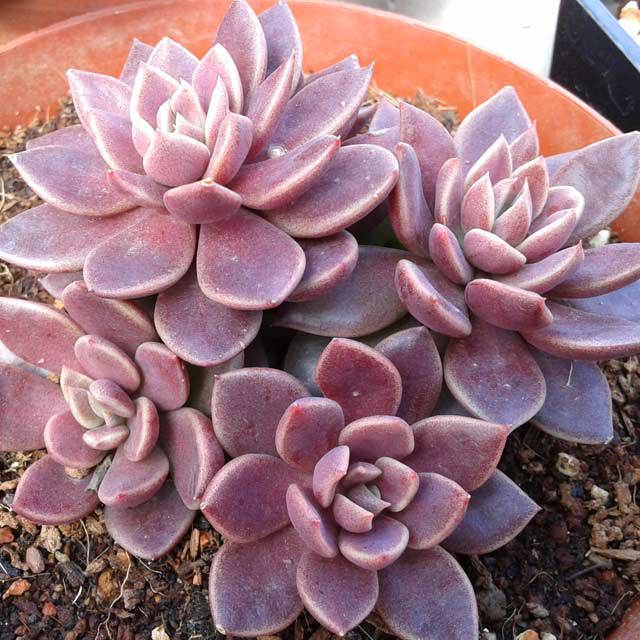
Why does your Sinocrassula indica have drooping leaves? Diagnose the cause and fix it with our step-by-step guide.
As a succulent, Sinocrassula indica is highly susceptible to fungal pathogens like Phytophthora when soil remains saturated. Excessive moisture causes root decay, which prevents the plant from transporting water upward, leading to limp, drooping leaves.
When the substrate dries out completely for extended periods, the plant uses its internal water reserves, causing the fleshy leaves to lose turgor pressure. This results in a characteristic soft, wrinkled, and drooping appearance.
Sinocrassula indica prefers warmer environments and can suffer cellular damage when exposed to temperatures below 50°F (10°C). This stress manifests as a loss of structural integrity in the leaves, causing them to sag.
A lack of essential macronutrients, specifically nitrogen, can weaken the cell walls and reduce the plant's ability to maintain upright growth. While less common in succulents, long-term use of depleted soil can cause structural drooping.
Your plant might also be experiencing one of these issues:

 English
 Italiano